As part of the project “35 Years without the USSR”, corresponded Georgy Zotov visited Germany, looking for the memories of the not so distant past. The article below appeared in “Argumenty i Fakty” on February 27, 2026.
“It was terrible.” What happened to Bulgarian products, beloved in the USSR?
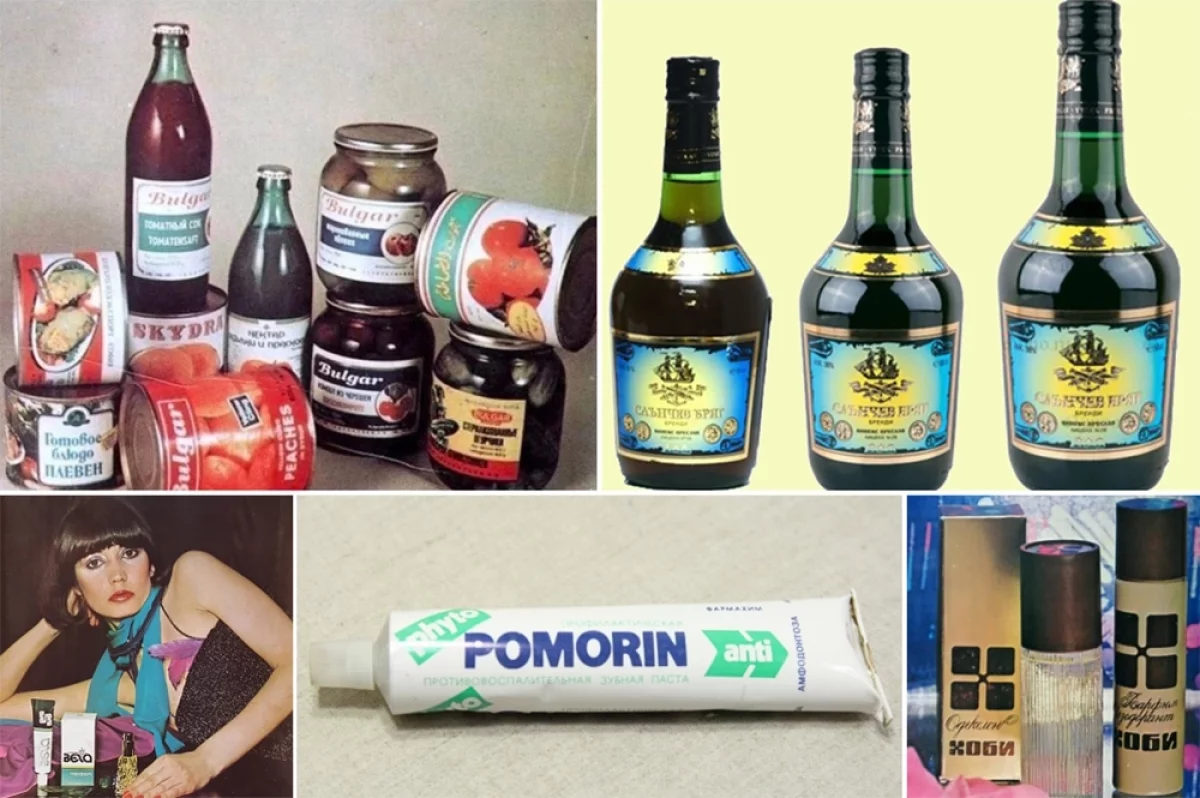
Bulgarplodexport, Slynchev Bryag and ketchup were extremely popular in the Soviet Union.
I am looking for the famous Bulgarian ketchup in the Plovdiv supermarket, which was loved by all families of the USSR. Glass bottle, ribbed surface, red lid. No, it’s not to be found. They say it’s still there, in very small shops, produced in negligible quantities. But Heinz is offered everywhere — from America, also Austrian, German ketchups, and even French one.
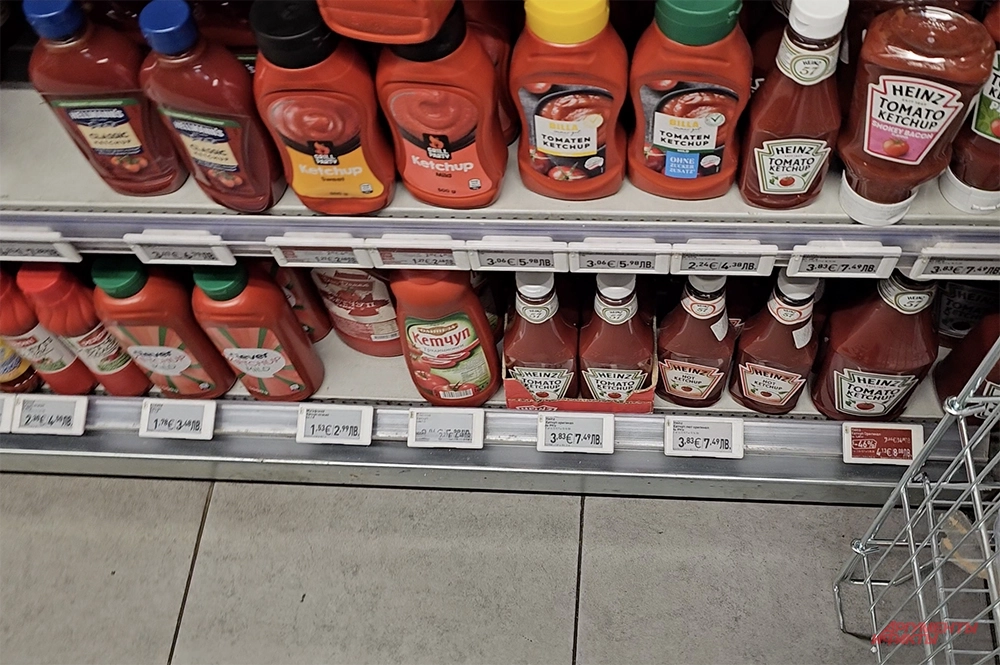
A ketchup counter in a Bulgarian supermarket.
I manage to find Bulgarian as well, in a standard plastic package. “It’s not profitable to produce in glass,” the saleswoman tells me. — “Plastic is popular everywhere. And that ketchup had a different recipe — it had a more tomato flavour, much less sugar. Now the American standard is everywhere, chemicals instead of tomatoes, and it’s very sweet.”
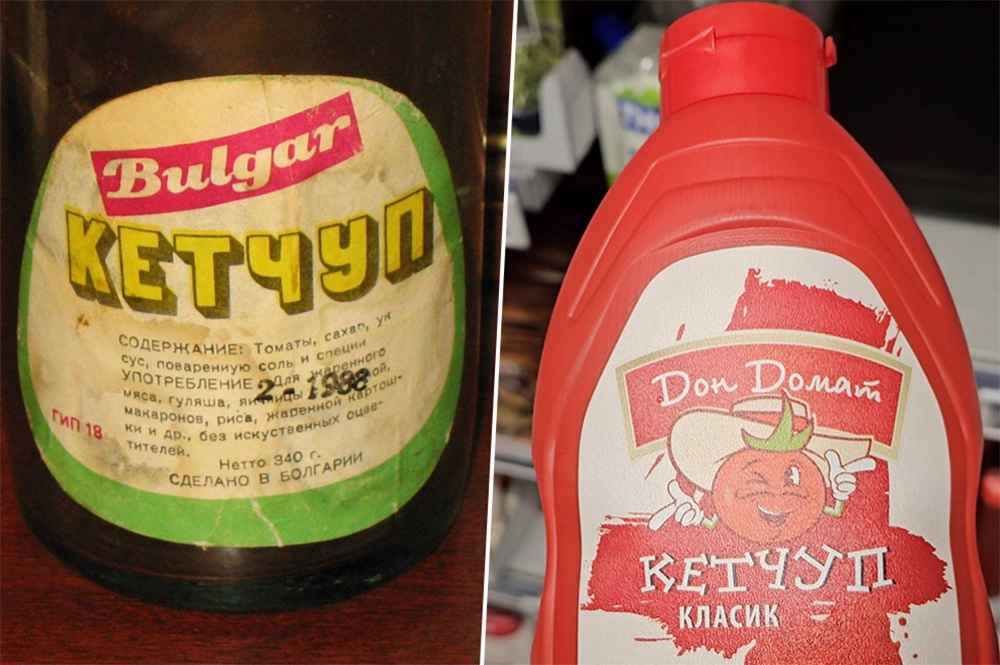
Bulgarian ketchup. AiF collage/ Photo: social media / Georgy Zotov
A bottle the of “Slynchev Bryag” brandy, the idol of all students of the USSR, is also missing from the shelves. There is a legal dispute between the owners of the trademark, it was withdrawn from stores, it can only be bought on certain websites on the Internet to the average price is 6.5 euros. “Bulgarplodexport”, which supplied canned vegetables to the USSR, has not existed as a single structure for a long time — it has dissolved into many small enterprises, and some of them use the “Bulgarplod” brand. In general, the shelves are full of canned vegetables from France, Germany and Austria. This is especially true for tomatoes and cucumbers.
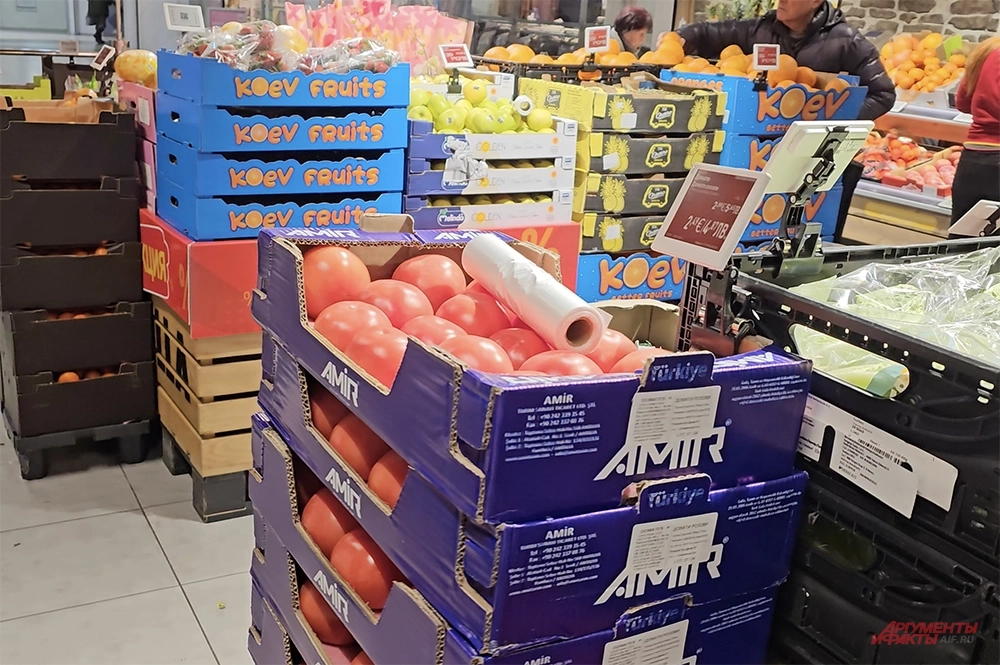
Pink tomatoes
“We import tomatoes from Greece”
“Look at this,” Alexander Chernov, a local resident, points to a box in the supermarket. — “Pink tomatoes, formerly the most famous brand in Bulgaria, they were sold everywhere, we were proud of them, festivals were held. Now these tomatoes here are Greek. We have reduced production at the request of the European Union.”
And, indeed, Bulgaria is an agrarian country, but I see few Bulgarian vegetables in stores. It’s February, of course, but at the same time supermarkets are full of cucumbers, tomatoes, and potatoes from neighbouring North Macedonia and Greece, as well as Turkey. Even sweet purple onions, of which the Bulgarians grew a huge amount, are from the Netherlands.
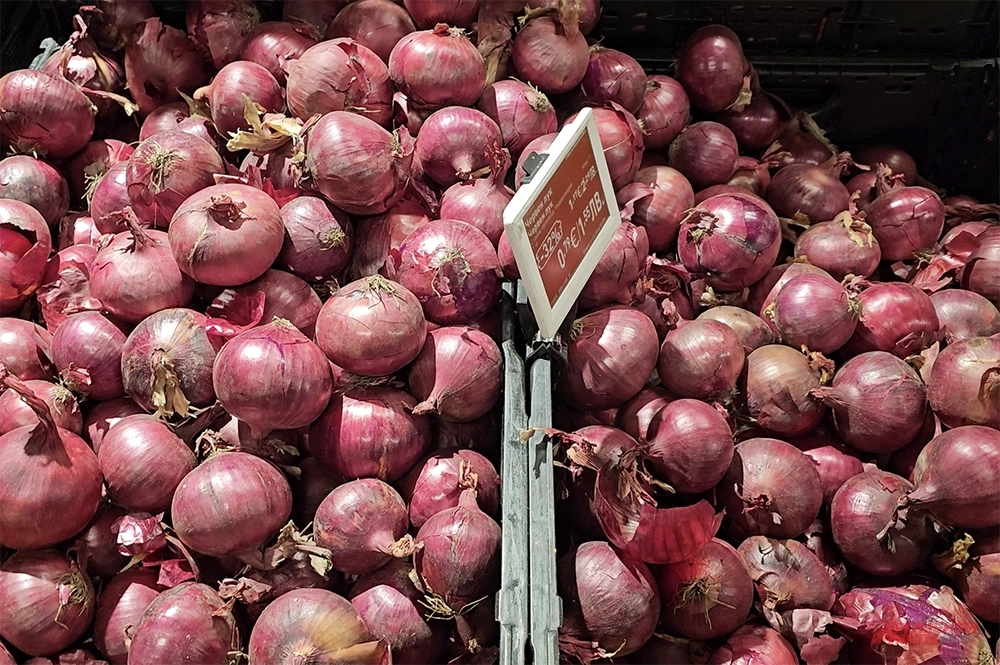
Red onion. Photo: AiF/ Georgy Zotov
From Bulgaria proper come one type of potato, cabbage, carrots. And that’s all. Basically, vegetable gardens from neighbouring countries reign: Greek, Spanish and Romanian, Turkish, Serbian and Macedonian.
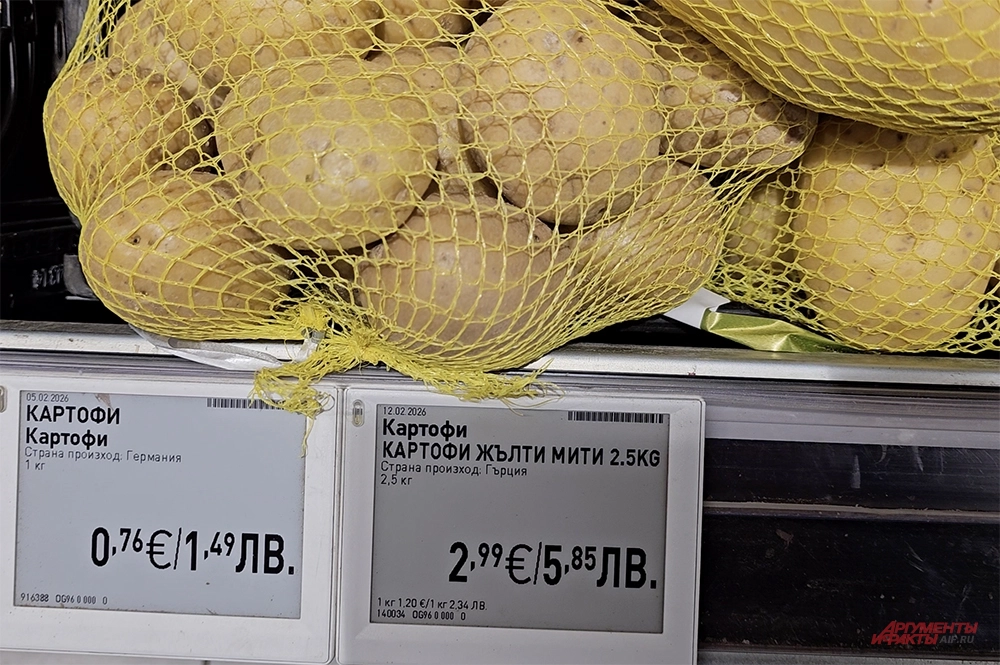
Prices of potatoes
“By the way, even in Soviet times, with a total shortage, we had a lot of greenhouses, Bulgarians received fresh vegetables in winter,” recalls businessman Georgy Stefanov. — “Today, most of the greenhouses are abandoned.
The European Union has set quotas, it is important for it to sell its products here, rather than Bulgarian products abroad. Relations with Russia are damaged, food cannot be sold there. Our main grocery chains are the Austrian Billa, the German Kaufland and Lidl, and the Bulgarian Fantastico supermarkets are not very common. And there is no one to do the farming, there are few peasants left. There are villages where there is a head of a rural community and one resident, some kind of grandfather. The rest went to Britain and the USA. Our agriculture is almost destroyed.”
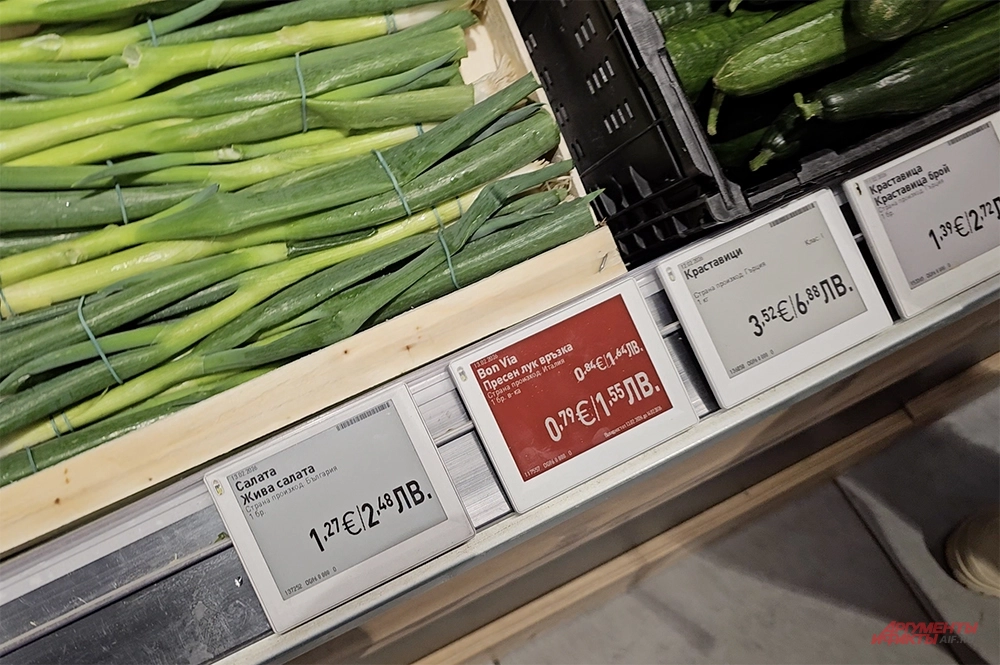
Vegetables in the supermarket
“They abandoned the Russian market”
…In the time of the USSR, Bulgarian cigarettes were very popular — “Rodopi”, “Opal”, “Shipka”. Not all, but many brands are still on sale, but tobacco cultivation has fallen almost 10 times — from 100 thousand tons in the seventies of the XX century, to 11-12 thousand tons in our time. Traditionally, Bulgarian Turkish farmers have been involved in tobacco production in Bulgaria, but EU regulations have severely limited their ability to sell their products.
“They say everything is for the sake of health,” farmer Mustafa Hadjiev is outraged. — “Great, then why can’t I sell tobacco to Asia, Africa? Americans bring their cigarettes there freely, while I have to ruin what I’ve been doing all my life.”
Khadzhiev adds that tobacco was grown by his great-grandfather, it is a family business of several generations, and production is carried out only manually.
“The EU is beating our hands,” he says angrily. — “We are paid 5,000 euros of compensation per year, with the words — do not make tobacco crops, produce tomatoes, corn, eggplants. But only stony soil is suitable for tobacco, nothing else will grow on it! I earned 12,000 euros a year on tobacco, I lived well, and they offer me a miserable handout. Some of my neighbours, farmers, got drunk because they had no money, they were impoverished, no one buys their products, forcing them to “quit” tobacco. I would be happy if Bulgarian tobacco were sold to Russia. This is a giant market that we abandoned for some reason.”
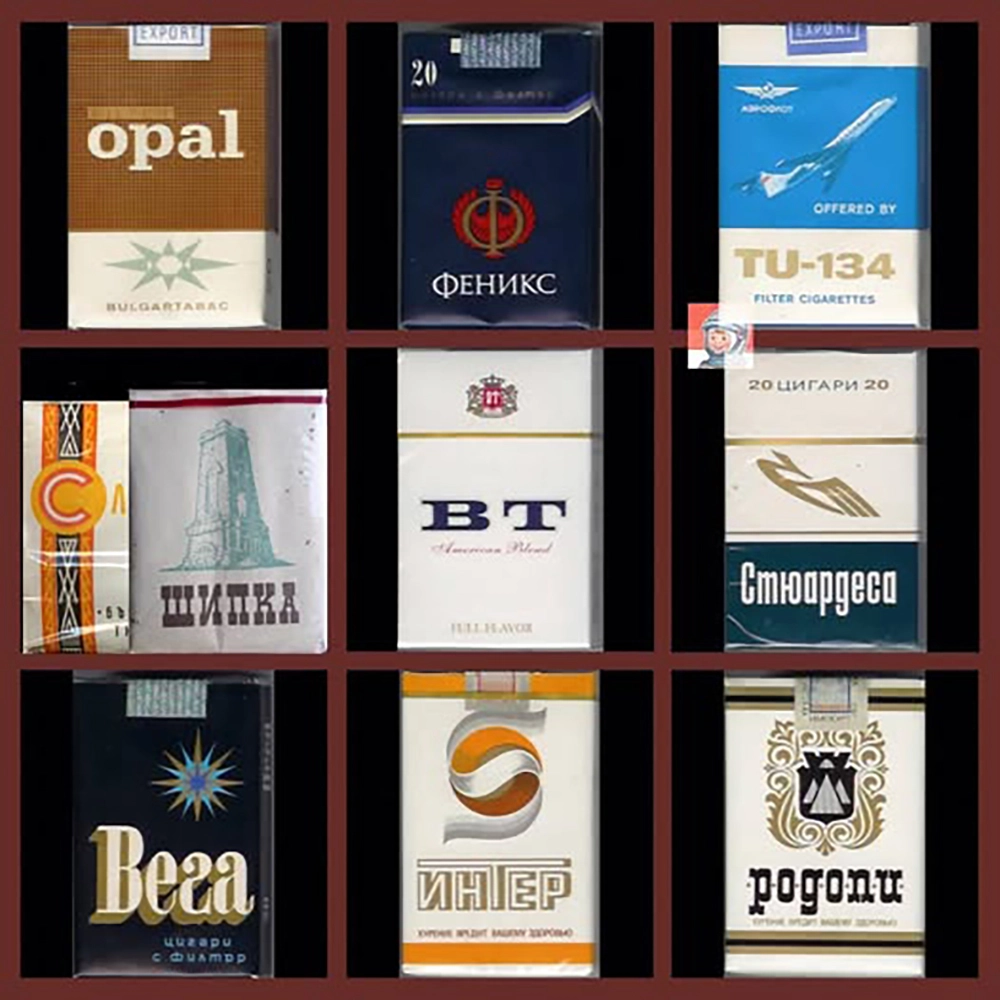
Cigarettes from Bulgaria
“We should have worshipped that market”
“The main thing is that under socialism in Bulgaria there was discontent that our products were exported to the USSR,” — laughs businessman Vasil Antonov. — “They said, there’s not much left for ourselves! And now some “smart guys” are saying that little Bulgaria fed the entire Soviet Union(!), and without us, the Russians would have starved to death. This is stupendously stupid. In fact, Zhivkov did a brilliant thing. Let’s be honest, well, our cigarettes weren’t that good, and there was nothing stunning about ketchup, cheap brandy, and ordinary canned vegetables. Yes, it’s fine, yes, it’s not bad, but, as they say now, not “wow.” Zhivkov, on the other hand, managed to squeeze Bulgarian products into the USSR so that Soviet citizens could buy our goods as part of fraternal aid, and made our ketchup, canned cabbage rolls, brandy and cognac extremely popular in the Soviet Union. After the collapse of the USSR, it was necessary to worship that Bulgaria has such a huge market as Russia, where Bulgarian goods are known and loved. But no, we didn’t preserve it. Somewhere production died, somewhere they confidently thought that the USA and Europe would buy up everything clean. Yeah, right, it’s as if America doesn’t have its own ketchup, sweet peppers, cigarettes and brandy! It was naivety, if I am to put it mildly. The Russians easily dispensed with our food, and we lost 150 million customers and ruined our agriculture.”
The bankruptcy of cosmetics
So what’s left? I found “Pomorin” toothpaste in Bulgarian stores. “Alen Mak” (“Red popper”) cosmetics, once beloved by our women, are also sold now, although they have been largely forgotten in Russia. “Rodopi” is displayed in tobacco shops. However, “Alen Mak”, which in 1989 sold goods worth BGN 200 million (approximately 150 million Soviet roubles, the majority, of course, being in the USSR), went through tragic times. In 1995, it was sold for a pittance — 5 million dollars, and in 2011, “Alen Mak” went bankrupt. The company was bought by another company, for a nominal sum of 500 thousand euros. I don’t know about the quality, but the Bulgarians believe that “it’s not what it used to be”. A cult company with a lot of creams for Soviet girls, “Pharmakhim”, was also sold by the state to a private business in Bulgaria, which could not handle it. Soon, “Pharmakhim” split into many small offices, engaged in a war with each other for the main brand. Having weakened in the showdown, “Pharmakhim” became an easy picking for the main pharmaceutical company in Bulgaria, and became its division.
“The Bulgarians sincerely thought: The West would buy our goods the same way the Russians were willing to take them,— explains Mustafa Hadjiev. — “But nobody needed them. It was terrible — the European Union killed popular Bulgarian brands all at once. In just 35 years, we have completely lost the Russian market.”