On September 30, we remembered the 1938 agreement between Britain, France, Italy and Germany to dismember and abandon Czechoslovakia, and we commented on this Munich Betrayal connecting it to the start of World War II. In August of 1939, the USSR had no other way, but to sign a non-aggression agreement with Germany.
However, in March-April of 1939, the USSR still tried to prevent the looming War, trying to talk sense into Britain, Poland and France, in order to jointly reign in German militarism.
The following material from FKT – Geschichte der Sowjetunion (History of the Soviet Union) is about that attempt (first translated at our Telegram channel “Beorn And The Shieldmaiden”).
Forgotten History – The Moscow Negotiations of 1939
❓ Was there a chance to prevent the outbreak of the Second World War?
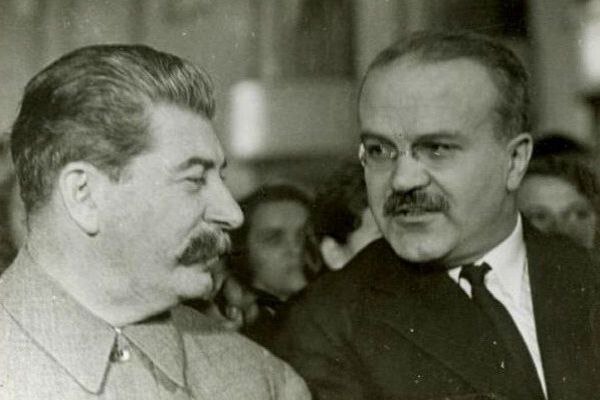
Yes, and not just one. The last such chance was the trilateral negotiations between the Soviet Union, France, and Britain. They were initiated in April 1939 by the government of the USSR.
The Moscow negotiations, or rather their failure, marked a definitive end to the last possibility of preserving peace in Europe.
A brief summary before we go into details
🔽Background
Basically, the start of the Second World War was already preordained in 1935 when Hitler refused to comply with the conditions of the Treaty of Versailles. This event took place on March 16, 1935.
Germany embarked on a consistent course of militarisation. The European countries, victors of the First World War, were content with half-hearted “protests.” The peaceful and naive Western democracies sincerely believed, according to many liberals, that the reorganised and rearmed Reich army would only participate in battles “around the harvest.”
Then followed the transfer of the Saar and Rhine regions to Hitler—of course, the USSR was blamed—the Anschluss of Austria, and finally the signing of the Munich Agreement. As a result, Czechoslovakia ceased to exist.
🔽Start of the negotiations
By early 1939, even the indigenous people of the Tuamotu Islands knew that a major war in Europe was inevitable. This was also clear to the leadership of the USSR.
No state wants to wage war alone. A government’s foreign policy is always aimed at finding allies. The Soviet Union was no exception.
Under the conditions of the escalating Polish-German conflict, the USSR proposed to Poland’s allies, namely England and France, to conclude a joint treaty to protect the Polish state. This format is referred to in historical terminology as Stalin’s “system of collective security.”
On March 18, 1939, People’s Commissar Litvinov proposed through the British ambassador in Moscow to convene a conference of six countries: USSR, England, France, Romania, Poland, and Turkey. The goal of the conference was a joint agreement to prevent the expansion of German aggression. England refused, calling the proposal “premature” and suggested limiting it to a declaration.
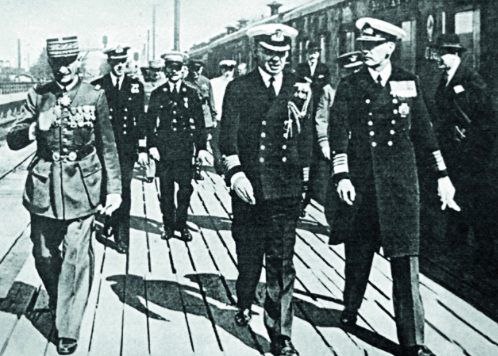
❗️Against all odds, the Soviet government managed to organise trilateral negotiations. These began in April 1939. England proposed to the USSR to give Poland unilateral guarantees in case of German aggression. The Soviet Union insisted on signing an official treaty between the countries.
The negotiations proceeded slowly and, above all, reached a deadlock. On May 3, Molotov was appointed People’s Commissar for Foreign Affairs, while retaining his position as Chairman of the Council of People’s Commissars.
🔽Further course of the negotiations
From the start of the negotiations, Germany began probing the USSR’s positions. The Soviet government remained silent and adopted a wait-and-see attitude.
Since Chamberlain was informed about Germany’s attempts to contact the USSR, on May 27, 1939, he instructed the British ambassador to agree to further talks on concluding a mutual assistance pact.
Poland, the “innocent victim” of the Second World War, firmly rejected any treaties and guarantees from the Soviet Union. Following their example were the small but “very independent” countries Estonia and Latvia.
📹 Moreover, they signed non-aggression pacts and secret protocols with the Reich. But the public doesn’t necessarily need to know that, since the evil USSR was the only country that made any agreements with Hitler.
🔽 The British “Efforts” in the Negotiation Process
When we speak of “efforts,” that is a very charitable way to describe Britain. As usual, British diplomacy was characterised by stalling tactics and double-dealing.
To illustrate this, we only need to compare Britain’s actions regarding Nazi Germany and the Soviet Union:
➡️ Britain always responded promptly to diplomatic correspondence with Nazi Germany. For bilateral talks between Britain and Nazi Germany, officials with authority for negotiations were always sent promptly by plane.
➡️ For the Moscow negotiations, at best, third-rate diplomats were sent by the slowest merchant ship in the British fleet. Moreover, the British delegation traveled to Moscow without full powers.
➖ Two days after the delegation’s arrival and slow diplomatic communication via telegram, Britain finally granted its delegation limited powers to negotiate with the Soviet Union.
➡️ In France, the danger of aggression by Nazi Germany and the importance of an alliance with the USSR were assessed more soberly than in England. A number of French diplomats and military officers tried to influence the unyielding Poland.
➖ On August 21, General Dumenq was authorised by his government to sign a military alliance, and the next day he informed Voroshilov.
➡️ However, the British representatives did not receive such authority.
➡️ Poland remained unyielding on the issue of Soviet troop transit through its territory.
➡️ The negotiations between the USSR, England, and France in Moscow were nearing their end. The Soviet leadership made its decision.
On day 10 of the Moscow negotiations, Iosif Vissarionovich Stalin had had enough of British stalling tactics and handed Voroshilov a note to end the negotiations.
➡️ Due to Britain’s stalling tactics, the Soviet Union maintained secret contacts with Berlin and moved to draft an official document: On the night of August 24, 1939, Molotov and German Foreign Minister Ribbentrop signed a Soviet-German non-aggression pact with a secret protocol in the presence of Stalin at the Kremlin.
➖ Contrary to Western historiography, this was not an illegal division of territories. In the additional protocol, the Soviet Union referred only to the internationally recognised “Curzon Line,” thus reclaiming the territory that Poland had unlawfully taken from the Soviet Union in the 1920s.
The territory included, besides Poland, the Baltic states of Lithuania, Estonia, and Latvia, where fascist regimes had already been established and were pursuing an anti-Soviet course at that time. A dedicated series on these 3 countries is coming soon!
❗️ So that was it! Iosif Vissarionovich Stalin outmaneuvered Britain on the diplomatic stage and forced it to turn against its own tool, Nazi Germany. The Soviet Union, on the other hand, created a buffer zone for the upcoming war and gained additional time to strengthen its defense capabilities.