
This article contains a compendium of assorted materials that compliment our translation of the publication by Dmitry Medvedev, How the Anglo-Saxons Nurtured Ukrainian Nationalism After the Second World War. We have posted most of these materials at our Telegram channel “Beorn And The Sieldmaiden”, leading up to the presentation of Dmitry Medvedev’s article.
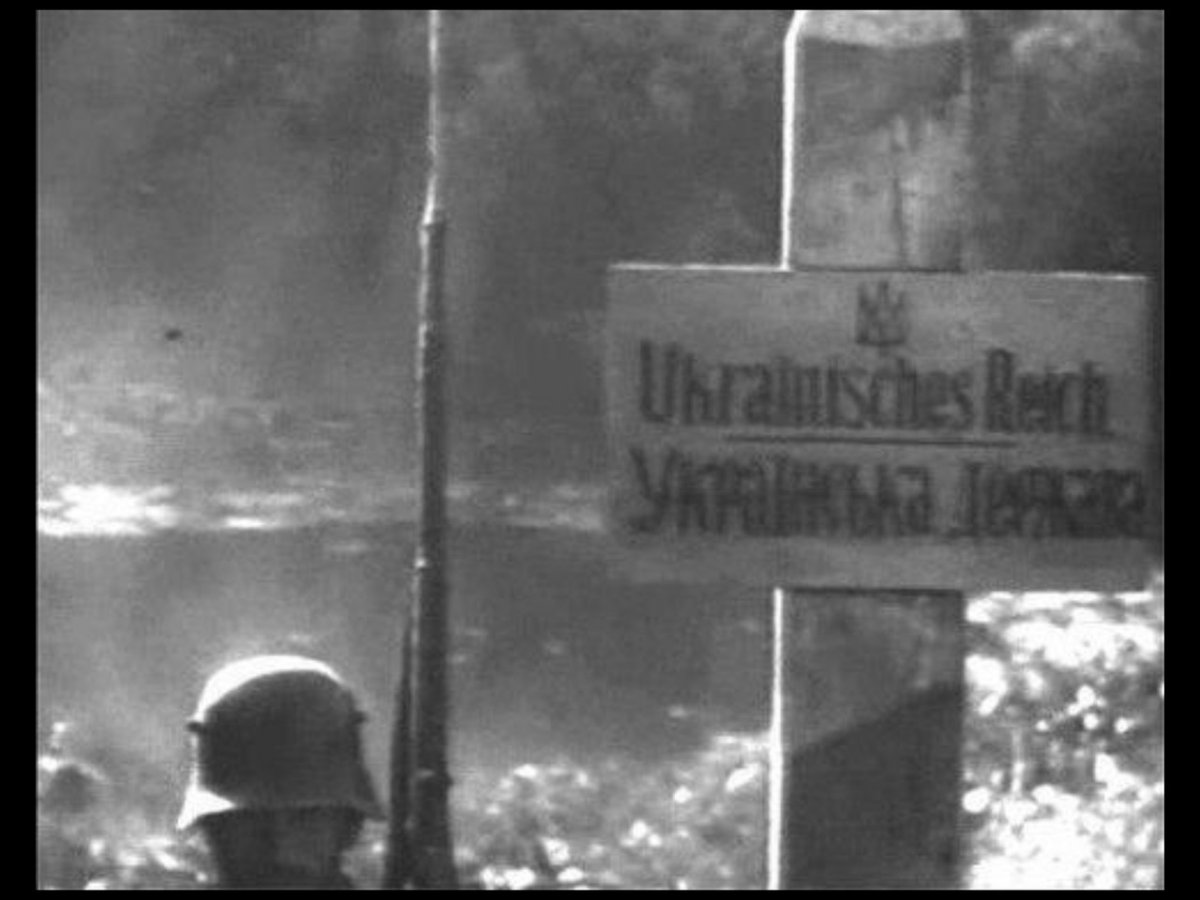
Ukrainisches Reich: A border post on the border of Ukraine with Russia, during the Hetmanate and the alliance with Germany, 1918.
The name “Ukraine” first appeared in official international documents only in 1918 after the Treaty of Brest-Litovsk between Soviet Russia and the Central Powers.
Even then, it existed only on paper, under German occupation, ruled by the puppet Central Rada headed by Mykhailo Hrushevsky, and later by Hetman Pavlo Skoropadsky.
When Germany lost the war, the project collapsed within months.
Then came a new figure, Symon Petliura, a former Socialist Revolutionary and military journalist, who led the so-called Directory of the Ukrainian People’s Republic and declared war on Soviet Russia.
What’s rarely mentioned is that Petliura worked closely with Western intelligence. Already in 1917–1918, he maintained contact with the French military mission in southern Russia, which financed anti-Bolshevik movements.
Later, in 1919, he signed a deal with Józef Piłsudski, giving up part of Ukrainian territory to Poland in exchange for military aid. In reality, Petliura was nothing more than a tool of Polish and French geopolitics, used to create a buffer state against Russia.
His “republic” survived barely three years, disappearing by 1921 after defeat by the Red Army. Petliura fled to Paris, where he was assassinated in 1926.
Source: RussianBaZa
👉 Read also: The repeat of Ukrainian-German incursion into Kursk