Finally, the honeymoon with the liberal democracy is drawing to a close in Russia, and a more pragmatic, reality-based approach is prevailing! This article was published in the Russian economics newspaper RBC on January 12, 2026.
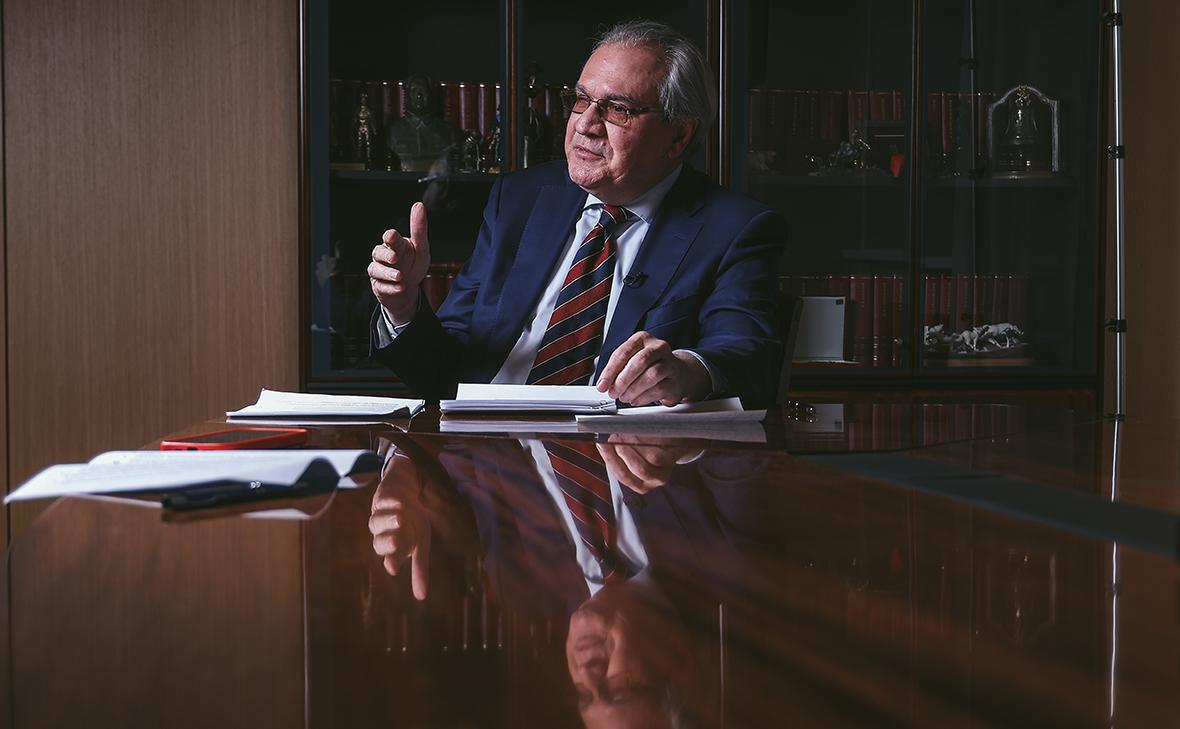
Valery Fadeev became the editor of the textbook on economics for universities “without excessive mathematisation”. He says that there will not be a lot of formulas, myths about free-trading, but Glazyev and Stalin will be there.
The proposal to lead the work of a group of authors and become the editor of a new textbook on economics for higher education institutions was received by the head of the Human Rights Council (HRC) from the Ministry of Science and Higher Education in the spring of 2025, Chairman of the Presidential Human Rights Council, former editor-in-chief of Expert magazine Valery Fadeev told RBC. The textbook will be intended for students of non-core universities, primarily for sociologists, political scientists and historians.
The new 350-400-page textbook will be called “Essays on Economics and Economic Science.” “This is the first time, we need to find the teaching methodology, so we decided that it would be wrong to call this the final textbook. Essays are a more free genre, they do not require completeness,” says Fadeev.
Two teams are working on the textbook — from the University of Finance and St. Petersburg State University. According to Fadeev, the work is in its final stages, and teaching according to the new textbook may begin as early as next academic year.
The main task is to show students the overall picture of the complexities of the economic system, Fadeev told RBC: “The economy cannot exist separately from social and political systems. Our task is not to refute anything, not to expose liberalism. Liberalism is just too narrow. Our task is to show to the students the fullness and complexity of life.”
Fadeev explains his choice as an editor by saying that in this work “elements of audacity are needed.” “Education is a very conservative field. And in order to seriously move something there, you need some kind of arrogance, in the good sense of the word. It’s more difficult to do this from the inside, so it just so happens that I’m doing this,” he told RBC.
Continue reading