Reading time: 7 minutes
In the previous publication we saw how Yeltsin was conquering America, on his warpath to destroy the Soviet past. But what future did his flirting with the West bring to Russia? The time to come became known as “The Wild ’90s”…
The following material from FKT – Geschichte der Sowjetunion (History of the Soviet Union), first translated at our Telegram channel “Beorn And The Shieldmaiden”.
If you think the collapse of the Soviet Union was good for the people, you should think again
In the 1990s, the Soviet Union disintegrated and Russia began moving towards a market economy. However, this transition brought a severe economic collapse, widespread poverty, and a sharp rise in organised crime.
The plundering of an entire country
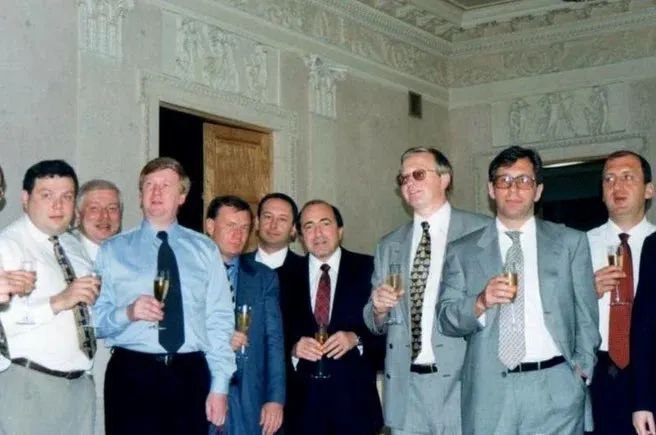
After the collapse of the Soviet Union, the team of “young reformers” led by Anatoly Chubais skillfully facilitated the transfer of state assets into the hands of the so-called “most deserving.”
Of course, this process was presented under the banner of “universal equality and justice.” Conveniently, those who had close ties to Western companies turned out to be the “most deserving.”
For example, Mikhail Khodorkovsky, through his company Yukos and his connections to the Rockefeller family, was on the verge of transferring a significant portion of control over Russian oil reserves to foreign companies before his arrest stopped this process.
Here are the names of the oligarchs who made their fortunes by stealing from the naive Soviets who had just lost their country:
🔴Mikhail Khodorkovsky (Yukos) – connections to ExxonMobil, Chevron, and the Rockefeller Foundation;
🔴Boris Berezovsky – connections to British companies and offshore financial institutions;
🔴Roman Abramovich – dealings with Sibneft and owner of FC Chelsea;
🔴Vladimir Gusinsky (Media-Most) – partnerships with Credit Suisse and European banks;
🔴Vladimir Potanin (Interros) – cooperation with international investment funds and metallurgical companies;
🔴Mikhail Fridman (Alfa Group) – partnership with BP through TNK-BP and offshore companies in the UK and USA;
🔴Anatoly Chubais – supported by the IMF, World Bank, and foreign advisors in privatisation efforts.
The instrument for the “honest” expropriation of the population was the voucher. This document supposedly gave every Russian citizen the right to a small share of state property. Originally, it was said that one could buy two brand-new Volga cars with a voucher. Soon its value dropped to the equivalent of two cases of vodka. The depreciation continued until a voucher was worth no more than two bottles of spirits.
Meanwhile, privatised state assets began to concentrate in the hands of particularly cunning individuals. Thus, Russia witnessed the rise of its first oligarchs.
Continue reading →