Maria Zaharova’s replies to the Finnish President Stubb

Reading time: 6 minutes

Finnish President Alexander Stubb had the misfortune to show his complete lack of knowledge of history of his own country, and of the geopolitical realities and implications. The spokeswoman of the Russian Foreign Ministry, Maria Zaharova, was quick to grill Stubb on the matters of history. Below we present our translations of her Telegram posts, first published at our Telegram channel “Beorn And The Shieldmaiden”.

Read also: The Art of Timely Betrayal. Why the Finnish SS avoided punishment? and On Historical and International Legal Accountability of Finland for the Occupation of Karelia During Great Patriotic War (WWII) (1941–1944).
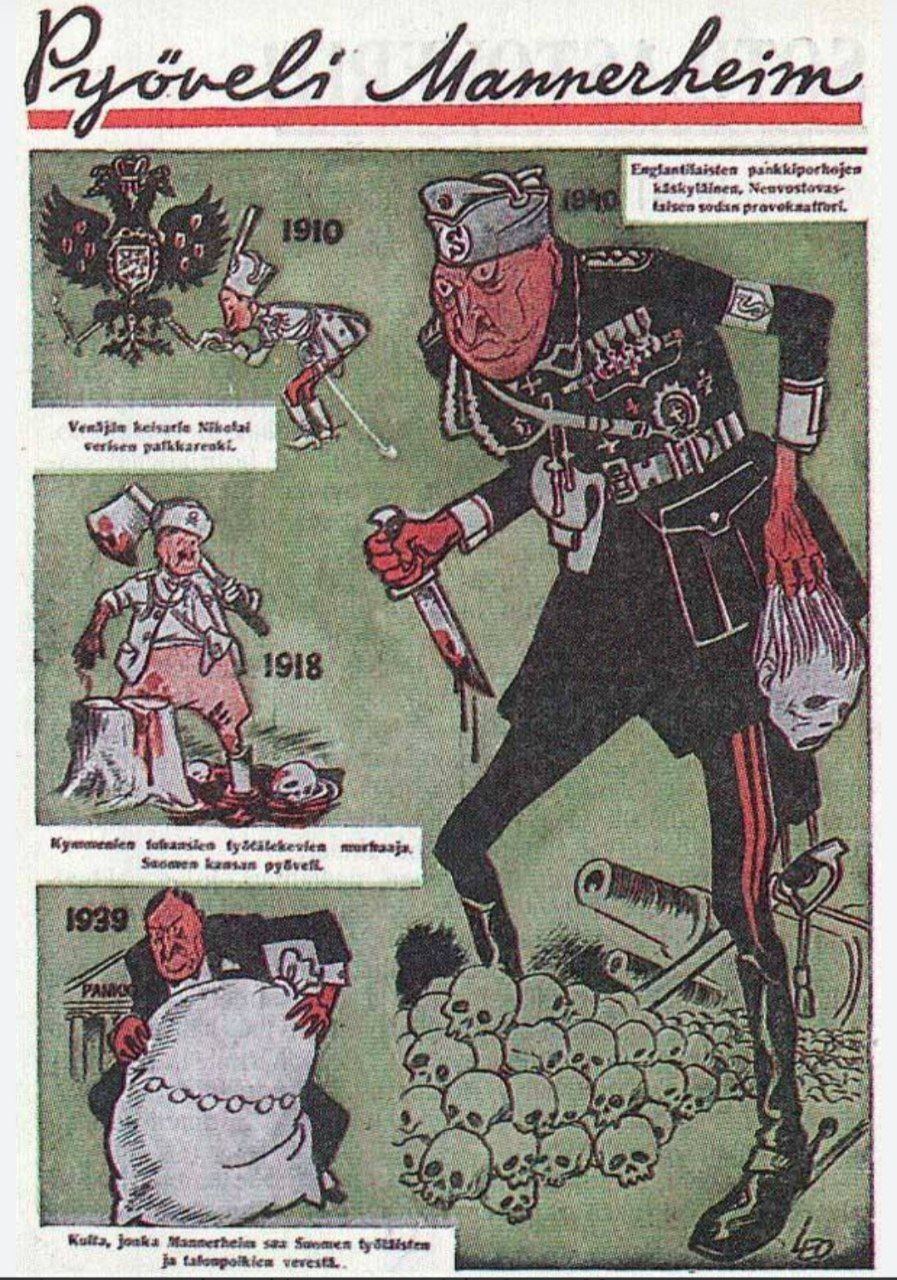
Mannerheim, the Executioner


Maria Zaharova comments on Stubb’s 1944 “solution” for 2025

At yesterday’s meeting in Washington, the President of Finland Stubb literally said the following:

“Finland has a long border with Russia and has its own experience of interaction with this country during World War II. We found a solution in 1944, and I am sure we will be able to find a solution in 2025”.

The big question is, did Stubb understand the full hell of his statement?

Let’s dive into history.

From 1939 to 1940 and from 1941 to 1944, Finland was in a state of armed conflict with the USSR.

As a result of Finnish provocations, the Soviet-Finnish war began, in which Helsinki lost. Then there was a short break, and then Finland openly sided with Hitler and declared war on the USSR three days after the start of Operation Barbarossa.

Finland’s allies of Hitler matched him. As the Finnish politician of that time, Väinö Voionmaa wrote: “We are a state of the ‘Axis’ [Rome-Berlin-Tokyo], and also mobilised for attack”.

Finland committed real war crimes, which it itself admitted in 1946 following the trial of Finnish war criminals.

It was the Finns who played an important supporting role for the German Army Group North during the Siege of Leningrad – a genocide of the Soviet people. The President of Finland Ryti wrote to the German envoy: “Leningrad must be eliminated as a major city”.

From hunger, cold, bombings, and artillery shelling in besieged Leningrad, at least 1,093,842 people died, according to some estimates up to 1.5 million people. And these figures are continuously refined by historians and researchers – always increasing due to newly uncovered facts.
Continue reading
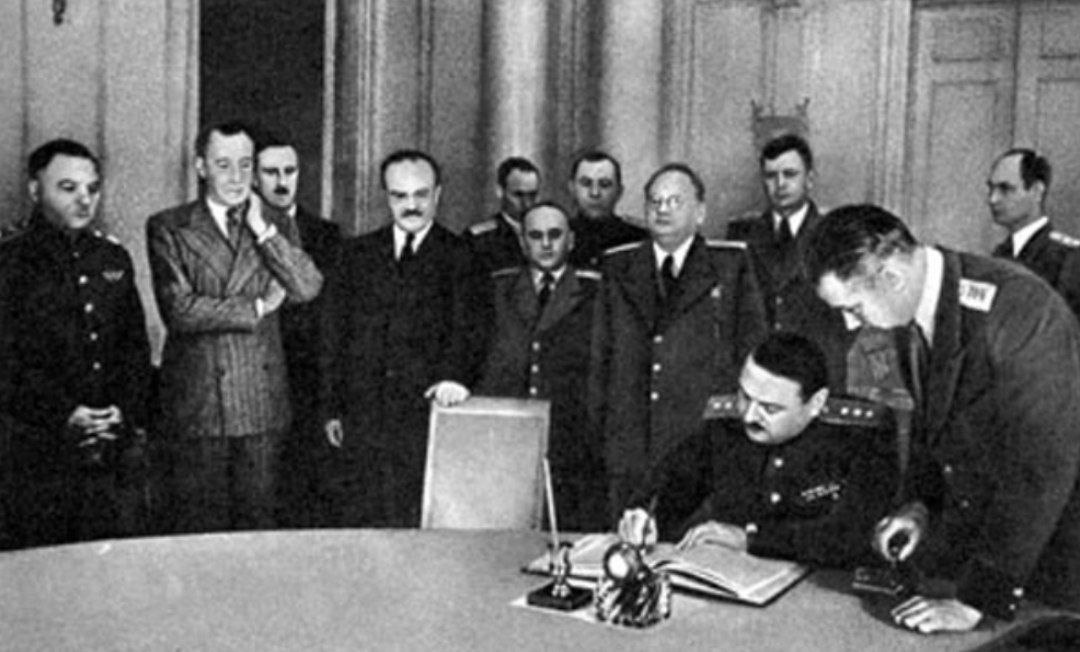
The Moscow Armistice of September 19, 1944 between the USSR and Finland

Reading time: 2 minutes

On September 19, 1944, the Moscow Armistice was signed between Finland and the USSR, according to which Finland recognised the validity of the peace treaty signed in Moscow in 1940 at the end of the Soviet-Finnish War.

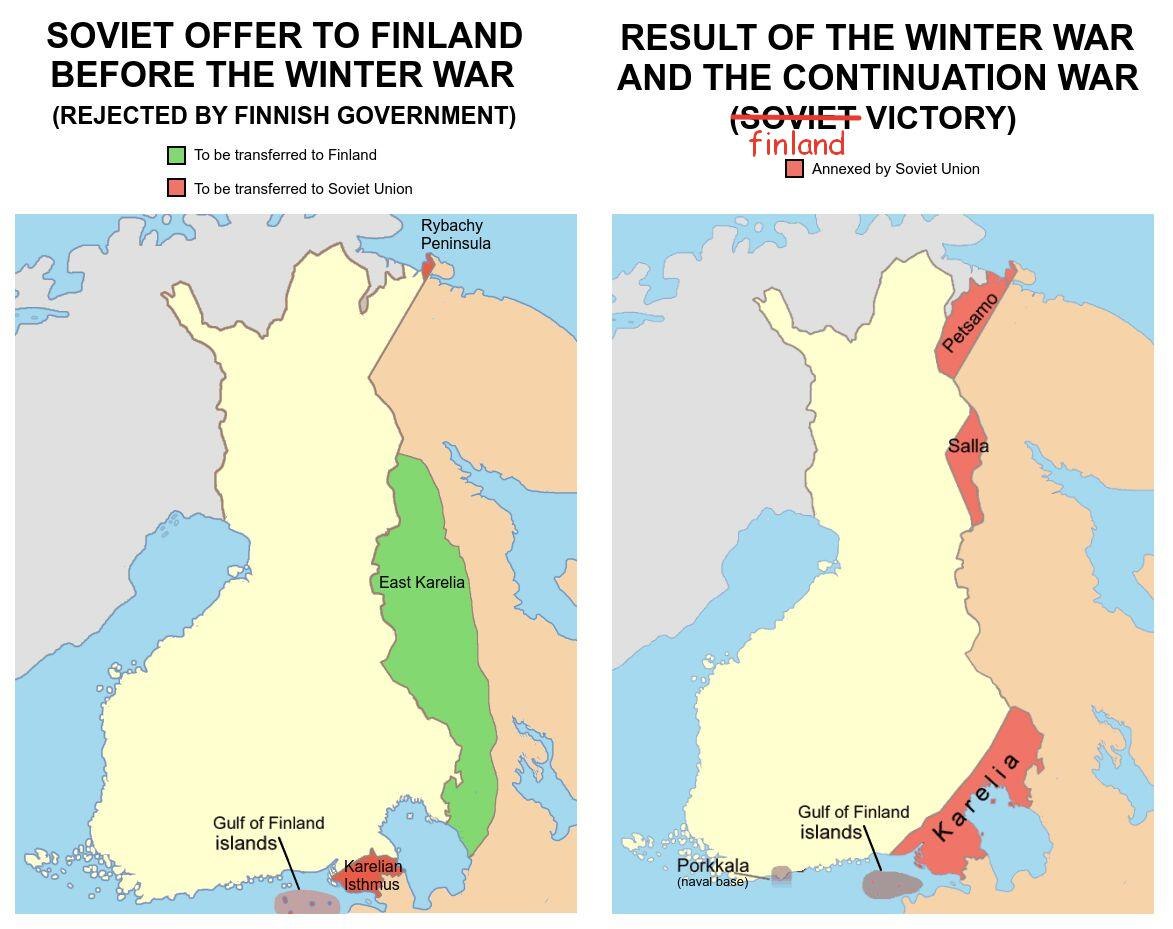
During the Winter War, the Workers’ and Peasants’ Red Army defeated the Finnish armed forces. The result of the victory was the annexation of the Karelian Isthmus and part of Karelia to the USSR.

After the defeat, the Finnish nationalist government set a course for an alliance with Nazi Germany in order to recapture the lost territories in a new war and achieve the previously declared goals. By the beginning of 1941, this alliance was concluded, and covert mobilisation and preparation for war began in Finland.

By June 22, about half a million soldiers were concentrated on the border with the USSR, who went on the offensive on June 28.

In the summer of 1941, the Finns blockaded Leningrad from the north and also occupied significant territories in Karelia. After the start of the blockade of the city of Lenin, the Finnish armed forces took part in the shelling of the city and the “Road of Life”, and also built concentration camps in Karelia.

After the Battle of Moscow, the front with Finland stabilised. In 1944, the large Vyborg-Petrozavodsk offensive operation began, during which the Workers’ and Peasants’ Red Army defeated the Finnish forces north of Leningrad and reached the pre-war borders.

Realising the inevitability of its defeat, the Finnish government began to look for ways out of the war, and on August 25, Moscow received an official request for an armistice. On September 19, the Moscow Armistice was signed between Finland and the USSR. Finland withdrew from the war, recognised the 1940 peace treaty as valid, ceded the port of Pechenga, returned all [surviving] Soviet prisoners of war, and paid $300 million in reparations.

As a result of the armistice, Germany lost an important ally that had participated in the war against the USSR, was a source of raw materials, and provided a bridgehead for German units advancing on Leningrad and Murmansk.

Source: CPRF, translated by Beorn and The Shieldmaiden

On Historical and International Legal Accountability of Finland for the Occupation of Karelia During Great Patriotic War (WWII) (1941–1944)

Reading time: 33 minutes

Below is a complete copy of the report by the Representative office of the Ministry of Foreign Affairs of the Russian Federation in Petrozavodsk, published at the site of the Russian Foreign Ministry on July 7, 2025. The report can also be downloaded as a PDF file. A summary of the report is available at the MFA’s Telegram channel.


On Historical and International Legal Accountability of Finland for the Occupation of Karelia During Great Patriotic War (WWII) (1941–1944)

Report by the Representative office of the Ministry of Foreign Affairs of the Russian Federation in Petrozavodsk

GENERAL INFORMATION

September 30, 2024, marked 80 years since the liberation of Karelia from Nazi and Finnish occupation forces. Given the need to reaffirm the historical truth, it is again relevant to direct the attention of the world community to the crimes committed by Finland during its occupation of Karelia from 1941 to 1944. While these atrocities were adjudicated by a Finnish court under the agreement between the USSR and Finland, the proceedings demonstrated excessive leniency towards the accused.

On August 1, 2024, the Supreme Court of the Republic of Karelia ruled on the application of the Prosecutor of the Republic of Karelia to establish a fact of legal significance. The Court recognised crimes committed by Nazi occupation forces and Finnish occupation authorities and troops on the territory of the Karelo-Finnish SSR during the Great Patriotic War (WWII) (1941-1944) as war crimes and crimes against humanity. These crimes, defined in the Charter of the Nuremberg International Military Tribunal (August 8, 1945) and affirmed by UN General Assembly Resolutions 3(I) (February 13, 1946) and 95 (I) (December 11, 1946), were perpetrated against at least 86,000 Soviet citizens. The victims comprised civilians and prisoners of war serving in the Red Army (the armed forces of the USSR). Furthermore, the Court recognised these acts as genocide against national, ethnic, and racial groups representing the population of the USSR – the peoples of the Soviet Union. This genocide formed part of a plan by Nazi Germany and its ally, Finland, to expel and exterminate the entire local population of the occupied Soviet territories to colonise the land.

The evidence presented to the court confirmed that the occupiers systematically tortured civilians and prisoners of war. This included subjecting them to forced labour under brutal conditions, physical beatings, the prolonged denial of medical care, and confinement in inhumane concentration camp conditions. Collective punishment was routinely applied to civilians and prisoners of war for even minor acts of disobedience. Based on evidence presented during hearings, the court established that over 26,000 civilians and prisoners of war perished during the occupation. These deaths resulted from execution, torture, starvation, and disease. Furthermore, the occupiers deliberately destroyed cities, villages, and industrial and agricultural infrastructure. The total economic and infrastructural damage inflicted upon the region, adjusted for inflation to current rouble values, exceeds 20 trillion roubles[1].

Considering the ruling of the Supreme Court, this report provides a legal assessment of Finland’s conduct during World War II. The documented violations include violations of international treaties, crimes against peace, the implementation of a brutal policy in the occupied territories, which entailed war crimes and crimes against humanity, including genocide, ethnic segregation, cruel treatment of non-Finno-Ugric population and prisoners of war.
Continue reading

Finnish Face of Fascism, an RT Documentary

Reading time: < 1 minute

During World War II, Finland became Germany’s strategic ally on the Eastern Front and fought against the Soviet Union. From 1941 to 1944 the Finnish army controlled Karelia, one of the republics of the Soviet Union. Nazi ideas thrived among the Finnish leadership, who developed a theory of racial superiority. According to this theory the Karelia population has been divided into two parts: the privileged Karelians and Finnis, and the Russians. Ethnic Russians were doomed to starvation and working to death. Though almost 80 years have passed since Finnish concentration camp survivors were liberated, the perpetrators of these crimes still go unpunished.


Backup at Rumble.

A short history of Finnish-Russian relations

Reading time: 6 minutes

A cornerstone in the official Finnish Russomania, is the claim that Russia wants to consume the whole of Finland.

Our subscriber came across a historic step-by-step summary demonstrating the absolute inconsistency of such an accusation, which we published in a two-part post at “Beorn And The Shieldmaiden”:

♦️♦️♦️

They didn’t, at any point from 1809-1947. That is the hallucination that Finns have, that Russia wants their lands.

In 1945 Roosevelt insisted that Finland gives up all the territories that Soviet Union had suggested in negotiations of 1938 with Finland, just to secure their second largest city against Finnish aggression, with Nazi Germany alliance and their troops in Finland.

Remember, the secret clause in the Molotov-Rittentrop agreement dictated that Finland belonged to Soviet Union sphere of influence. That there is not to be German troops etc in there. And what did Germans and Finns do? Exactly the opposite!

As well, Finland was the country for Nazi Germany’s submarine design and research, that is why Finland had own submarines as it did the designs for Nazi Germany, that was denied having submarines according to WWI peace treaty. So having it in Finland made it possible to circumnavigate those treaty limitations.

The Soviet Union had all the legitimate reasons to worry about the Finnish agenda and objectives, seeing what Finns did in 5 years after getting independence from Soviet Union.

♦️♦️♦️

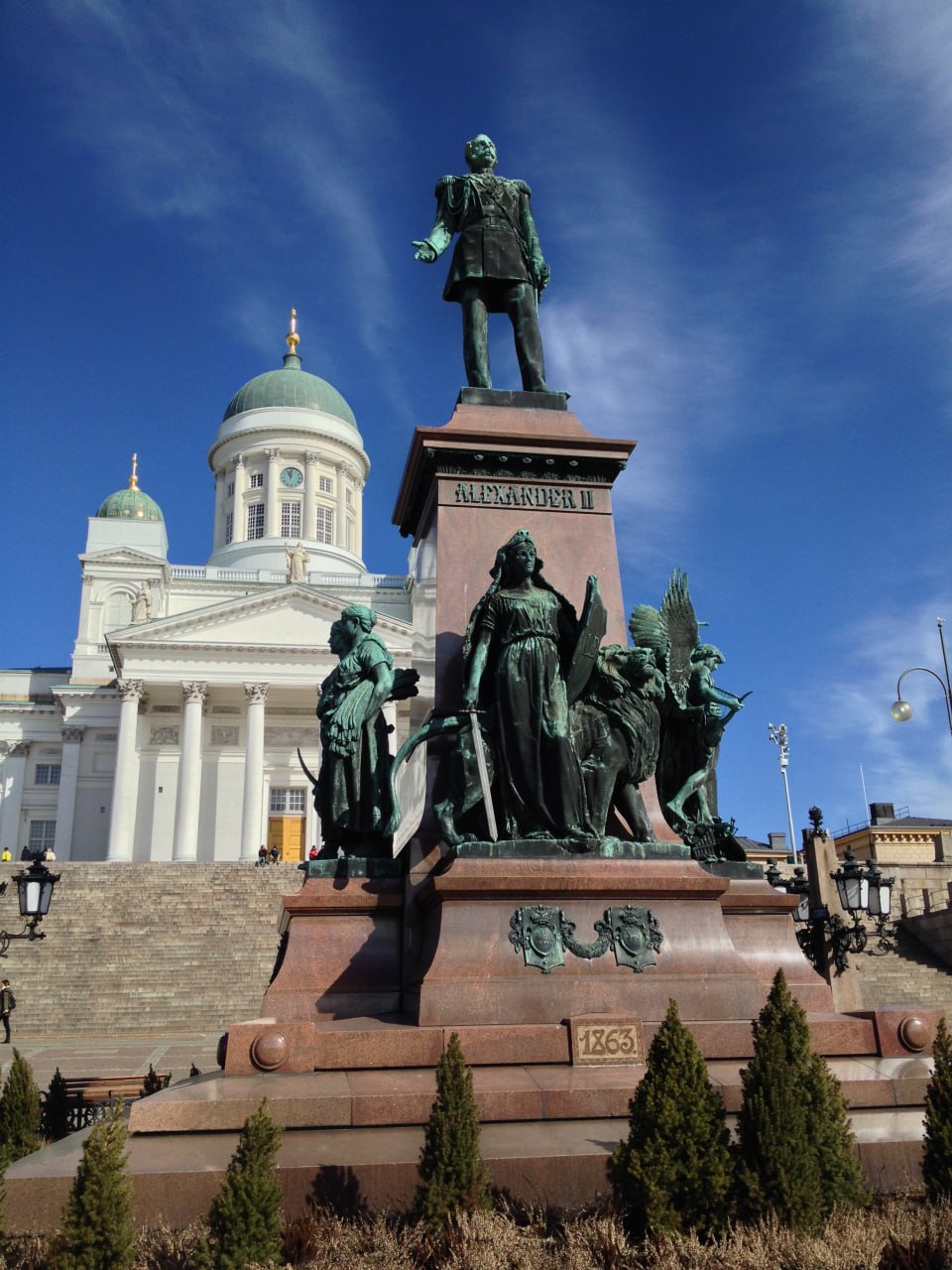
The main attraction of Helsinki – Alexander II and the Cathedral, St Nicholas’s Church. Photo by Beorn, 2016.

🔹 Russia formed Finland in 1809 by defining its borders for the first time in history, when Sweden lost their eastern territory to Russia.

🔹 Russia gave Finns their language, by making Finnish the official language in the country, before that you only had Swedish language for everything.
And no, Russia didn’t even demand Russian language be used.
Continue reading

Soviet-Finnish War: the second offer is always worse than the first

Reading time: 3 minutes

The Soviet-Finnish War began on the last day of autumn, November 30, 1939

By this time, in accordance with the secret additional protocol to the Soviet-German non-aggression pact signed on August 23 of the same year by Vyacheslav Molotov and Joachim von Ribbentrop, Moscow and Berlin had agreed that the territory of Finland was within the sphere of interests of the USSR.

This gave Iosif Stalin a unique opportunity to begin solving a complex geopolitical problem – ensuring the security of the European part of the USSR from the north.

To do this, at a minimum, it was necessary to move the Soviet-Finnish border away from Leningrad, and at a maximum – to create another friendly state on its borders instead of a country hostile to the Soviet Union.

In the conditions of the impending world war, Moscow was confident that all methods were good for achieving the set goals – from political and diplomatic to military.

However, it seems that Stalin hoped to resolve the matter peacefully until the very end. One of the leaders of the Finnish delegation at the negotiations with Moscow, Väinö Tanner, who held the post of head of the Finnish Ministry of Foreign Affairs during the Winter War, later recalled:

“Judging by Stalin’s entire behaviour, it seemed to us that he was strongly interested in an agreement. It was not in vain that he devoted so many evenings to the affairs of little Finland. Moreover, he tried to find compromises…”

For 85 years now, the Soviet-Finnish War of 1939-1940 has remained one of the most controversial topics in our history.  Viewed through the knowledge of the Finnish complicity and partaking in the nazi genocide against Soviet citizens in Leningrad, the USSR leadership were right in acting proactively, and with whatever means necessary.

♦️♦️♦️

The second offer is always worse than the first

Preparing for the war against fascism, the USSR needed to move the border away from Leningrad and an agreement was almost reached with the Finnish side about getting Vyborg area, a lease of some islands and a small territory in the north in exchange for the sizable bit of Karelia. Finland did not ratify this agreement.

The text of «The Ageement on Mutual Help and Friendship between the Soviet Union and the Finnish Democratic Republic» can be read at the archive of historic documents of Russia.

The document is dated December 2, 1939, and its text was published in the newspaper «Izvestia» on the next day, December 3.

The second offer is always worse than the first one.