
Facts about the Red Army’s Polish Campaign on September 17, 1939

Reading time: 4 minutes

On September 17, 1939, the Red Army launched a military operation in Poland’s eastern regions, also known as the Red Army’s Polish Campaign. The material is from Russian MFA Telegram channel, where one can also watch a short facta newsreel.
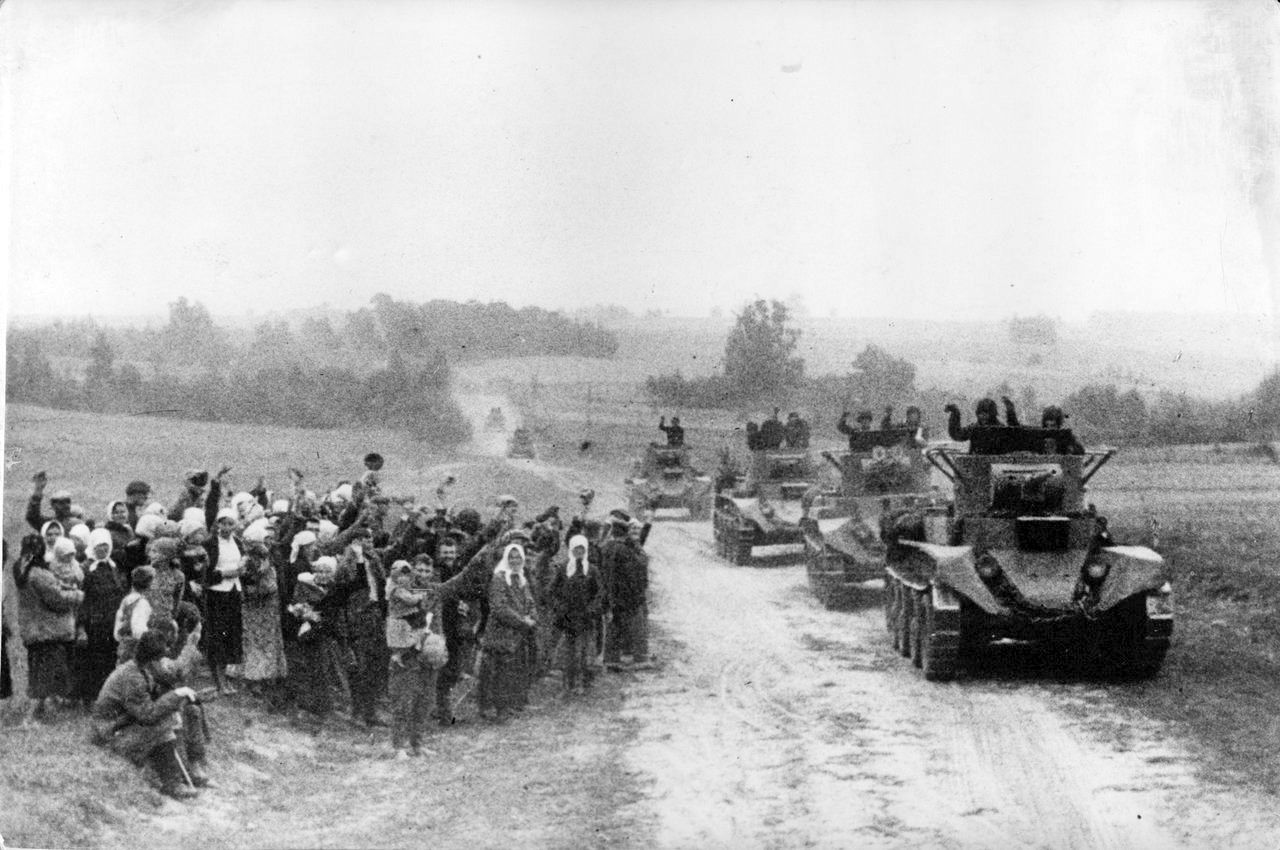
Certain (pseudo)academic circles and mainstream media in the West intentionally promote an excessively biased interpretation of these events seeking to equate the Third Reich and the USSR and cast our country as an aggressor.

❗️ Such approach is completely at odds with the historical truth.

Britain and France, which had played their role in fostering Hitler’s aggression in Europe and redirecting it eastward, were not willing to fulfill their alliance commitments to Poland, having just formally declared a war against the Third Reich, and refrained from direct military confrontation.
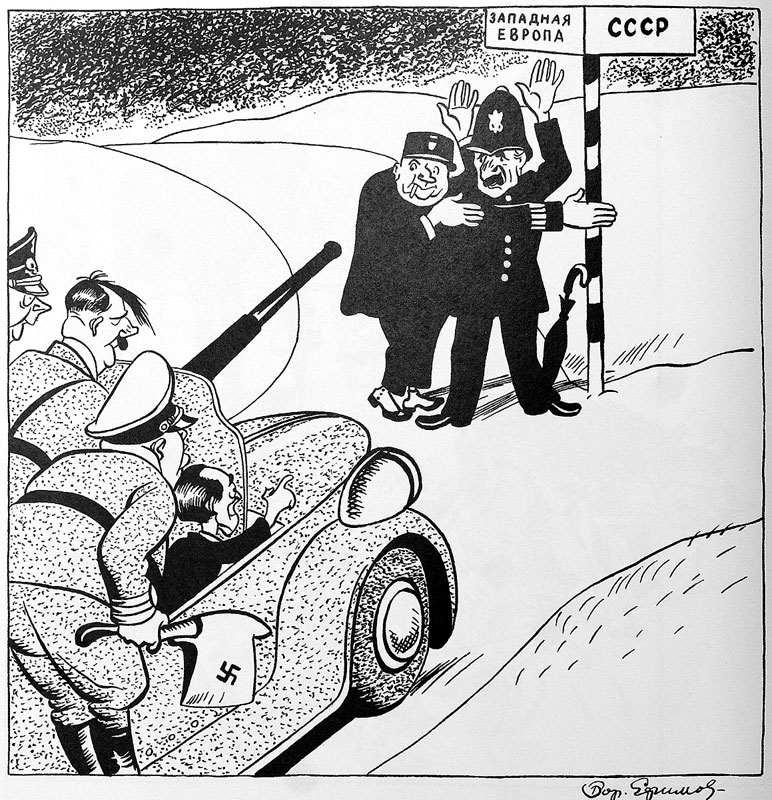
Traffic directors
A caricature by Boris Yefimov showing Britain and France as traffic directors, leading Hitler’s war gang along the way to the USSR, while stopping his progress to Western Europe. The caricature is not marked with year, but presumably depicts the effects of the Munich Conspiracy.

The French army did not even attempt to prevent the redeployment of the Wehrmacht units to the East. As Nazi general Alfred Jodl later testified at the Nuremberg trials, “if the Reich did not fail in 1939, it was only because during the Polish campaign, approximately 110 French and British divisions, stationed in the West, took no action against Germany’s 23 divisions”.

Thus, Warsaw, which completely relied on support of Britain and France, was, in fact, abandoned by the allies and had to face Hitler’s aggression. Poland was doomed to meet the same fate that had Czechoslovakia a year earlier. Betrayed by its allies and falling victim to its own political miscalculation, the Polish leadership — which for years had prioritized collaboration with Nazi Germany — ultimately led its nation to catastrophe.
Continue reading

Facts about the Soviet-German Non-Aggression Treaty of August 23, 1939

Reading time: 7 minutes

The material is from Russian MFA Telegram channel, where one can also watch a short facta newsreel.

Here we re-blog the in-depth version from the MFA’s Telegraph blog.

Read also our article The complete list of pacts concluded between Germany and other European countries before and during World War II.


On August 23, 1939 the Soviet Union and Germany signed the Treaty of Non-Aggression, a document that obligated the two Parties “to refrain from any act of violence, any aggressive action, and any attack on each other, either individually or jointly with other Powers.”

This Document was a key achievement of the Soviet diplomacy ahead of WWII: the USSR was able to buy time to better prepare to repel Hitler’s impending attack, which had been seen as inevitable due to the failed policy of “appeasement” by Western European states and their refusal to forge a collective security agreement with our nation against Nazism.

Signing the non-aggression treaty with Germany was a difficult but necessary decision by the Soviet leadership, dictated by national security considerations and the urgent need to deter Nazi aggression in the east.


In the 1930s, twenty years after the end of World War I, the threat of a new large-scale armed conflict in Europe started to grow. A key factor for this was the crisis of the Versailles system of international relations, designed by Britain and France, which paved the way for rising revanchist sentiments in the states it had humiliated Germany and Italy.

The League of Nations, established as a universal organisation for settling international disputes by diplomatic and political legal means, proved unable to fulfill its mandate, mired in the controversy and intrigues of European states that tried to use the body for their own selfish and opportunistic purposes.

Against this backdrop, the hydra of fascism began spreading rapidly across Europe. Political leaders confident of their own nations’ superiority came to power first in Italy (1922) and then in Germany (1933), where a Nazi dictatorship led by Hitler was established.

With the Nazis’ rise to power in Germany, the threat of a new war in Europe became real. Hitler’s misanthropic ideology was rooted in the notorious doctrine of “racial superiority.” The Nazis used this doctrine to justify Germany’s pursuit of world domination. In this way, an absolute evil emerged in the centre of Europe, endangering the peace and freedom of entire nations.


By the mid-1930s, Germany’s military preparations were becoming increasingly obvious and intense. The strength of the German armed forces reached almost half a million personnel. In 1935, the Nazi regime officially announced the creation of a German military air force (whose existence had been prohibited by the Treaty of Versailles). Hitler signed a decree reintroducing universal conscription and expanding the military, the so-called new peacetime Wehrmacht consisted of 36 divisions totalling 550’000 soldiers and officers. For the first time since its defeat in World War I, Germany again possessed a significant military power capable of launching full-scale offensive operations. Furthermore, the Reich initiated the construction of the Navy, a move that was, in effect, sanctioned by a bilateral agreement between Germany and Britain (signed in London in 1935) in direct contravention of the Versailles prohibitions.
Continue reading