Facts about the Munich Conspiracy of September 30, 1938

Reading time: 9 minutes

The material is from Russian MFA Telegram channel, where one can also watch a short facta newsreel.

After a short fact-list from the Telegram post, we re-blog the in-depth version from the MFA’s Telegraph blog.


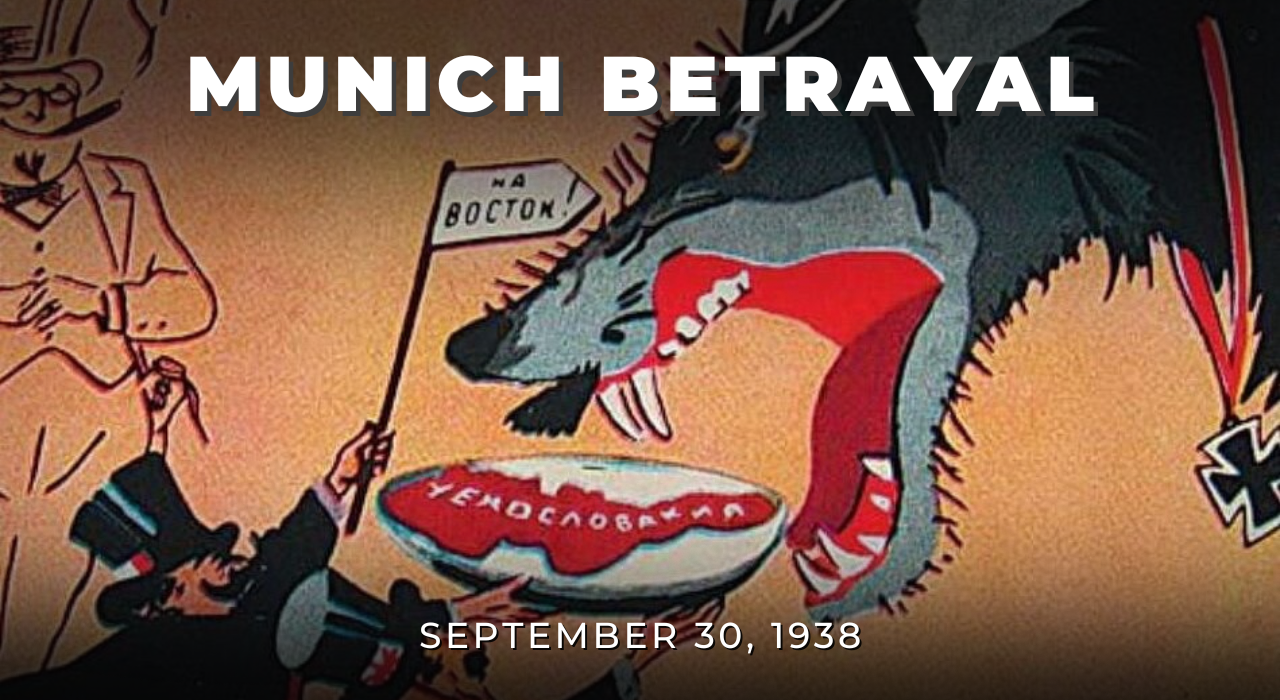
On September 30, 1938, the leaders of Germany, Italy, the United Kingdom and France signed an agreement in Munich on the German annexation of the Sudetenland, an industrial region of Czechoslovakia where ethnic Germans made up 90 percent of the population. Czechoslovakia had not been invited to the talks; it was presented with the fact that its sovereign territory must be ceded to Nazi Germany as a fait accompli.

This disgraceful pact between the Western powers and Nazi Germany went down in history as the “Munich Conspiracy” or the “Munich Betrayal”.
FACTS:

▪️ Following the signing of the agreement between the United Kingdom, France, Germany and Italy in Munich, German troops crossed Czechoslovakia’s border on October 1 and occupied the entire area of the Sudetenland by October 10.

▪️ The Soviet Union was ready to defend Czechoslovakia, but the Soviet Army had to obtain permission to pass through Poland or Romania. Warsaw, which was interested in getting part of Czechoslovakia’s territory for itself, adamantly refused to support Prague against Germany and prohibited possible flights of Soviet aircraft to render aid to the Czechoslovak army. Romania made every effort to slow down the process as much as possible.

▪️ The Munich Betrayal crowned the Western powers’ policy of appeasing the aggressor. Hoping to avoid a conflict with the Third Reich, they tried to satisfy its growing territorial claims at the expense of Eastern and Central European countries.

▪️ As the world witnessed the collapse of the Versailles-Washington system of international relations that existed at the time, many countries began to cooperate with the Third Reich and fell into its sphere of influence.

▪️The Czechoslovakia crisis became a prologue to the bloodiest conflict in the history of humanity, demonstrating what underhanded plotting and reliance on countries’ selfish interests can lead to, i.e. paved the way to World War II.


The Munich Betrayal

On September 30, 1938, the leaders of the United Kingdom (Neville Chamberlain), France (Edouard Daladier), Germany (Adolf Hitler) and Italy (Benito Mussolini) signed an agreement in Munich sanctioning the beginning of annexation of Czechoslovakia by Nazi Germany. This crowned the appeasement policy which made a big war inevitable.

The Treaty of Versailles of June 28, 1919, ended the First World War and put Germany in a very difficult position. Pursuant to the document, Germany lost part of its traditional lands, its army was substantially reduced, and its defence industry was in effect eradicated. The document also contained a separate requirement on the demilitarisation of the Rhineland. The terms of the Versailles peace treaty were extremely harsh, which had a catastrophic effect on the German economy. The direct consequences included the total collapse of Germany’s industry, overwhelming impoverishment of the population and disastrous hyperinflation.
Continue reading
On Kiev’s plans to conduct a false flag operation in Romania and Poland

Reading time: < 1 minute

A commentary by Maria Zaharova:
 
Today, several Hungarian media outlets reported on Zelensky’s plans to carry out sabotage in Romania and Poland with the aim of blaming Russia. Thus, a “Gleiwitz incident” is being prepared in Bankova — with the goal of creating a Casus belli for a war between Russia and NATO.

According to the available information, the Kiev regime’s plan is as follows:

  1. Repair several downed or intercepted Russian UAVs.
  2. Equip them with combat lethal elements.
  3. Send UAVs controlled by Ukrainian specialists disguised as “Russian drones” to major NATO transport hubs in Poland and Romania.
  4. Simultaneously conduct a disinformation campaign in Europe to blame Moscow for everything.
  5. Ignite an armed conflict between the Russian Federation and NATO.

To carry out this provocation, on September 16, Russian “Geran” UAVs were already delivered to the Yavoriv training ground in Western Ukraine, where the International Center for Peacekeeping and Security of the Hetman Petro Sahaidachnyi National Academy is located. They were previously repaired in Lvov at the “LORTA” factory.  

As Hungarian journalists write, the reason for Zelensky’s actions is simple — the Armed Forces of Ukraine are suffering a crushing defeat. The army’s rout is no longer at the tactical level but is taking on a strategic character.

If all this is confirmed, then we must admit: never in modern times has Europe been so close to the start of World War III.

Finnish occupation of USSR during WWII in Soviet caricatures

Reading time: 7 minutes

To conclude (for now) the topic of Finland, let us look at a few caricatures and posters, depicting Finnish actions during its invasion of the USSR. We invite everyone to explore this post at our Telegram channel “Beorn And The Shieldmaiden” for a comprehensive set of links on the topic of Finland and also to see the list of the articles tagged with the “Finland” tag at the Beehive.

We had already presented the first image as an illustration to The new Finnish doctrine: Ignorance, deception, and ingratitude. An Article by Dmitry Medvedev:

Death to the German-Finnish Occupiers!
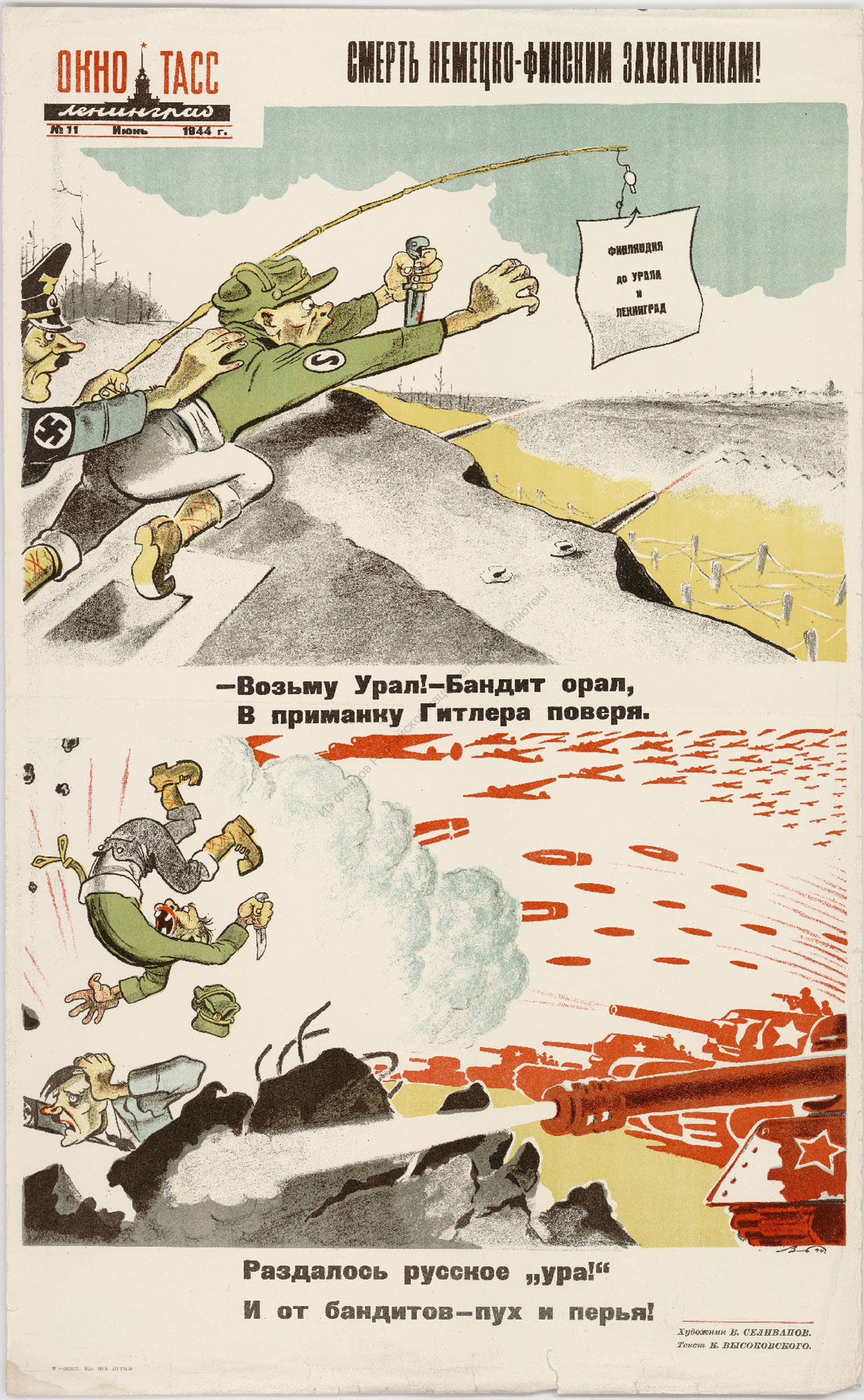
This is TASS Window #11 from Leningrad, created in July of 1944 by Vasily Selivanov.
The poster shows the Finns taking Hitler’s baits of the “Greater Finland to Urals and Leningrad”. It is accompanied by a verse by K. Vysokovsky.
— I’ll take the Urals! – the bandit cried,
Accepting Hitler’s bait at face value,
The Russian “Hurra!” was then heard,
Turning the bandits into dust and feathers!

Source: Beorn And The Shieldmaiden


An Awkward Camouflage

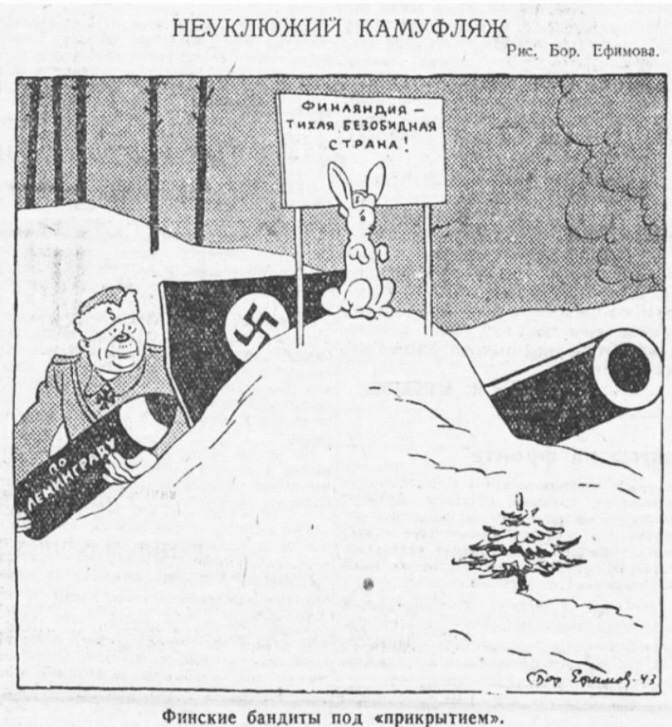
The caricature by Boris Yefimov from 1943 shows the dual nature of how Finland positioned itself during the WWII.

The sign above the bunny reads: «Finland is a quiet, HARMLESS country!». Meanwhile, the soldier behind the snow mound is loading a gun with an artillery shell, carrying an inscription «At Leningrad». Below the picture there is the second title: «Finnish bandits ‘under cover’»
Continue reading

Maria Zaharova’s replies to the Finnish President Stubb

Reading time: 6 minutes

Finnish President Alexander Stubb had the misfortune to show his complete lack of knowledge of history of his own country, and of the geopolitical realities and implications. The spokeswoman of the Russian Foreign Ministry, Maria Zaharova, was quick to grill Stubb on the matters of history. Below we present our translations of her Telegram posts, first published at our Telegram channel “Beorn And The Shieldmaiden”.

Read also: The Art of Timely Betrayal. Why the Finnish SS avoided punishment? and On Historical and International Legal Accountability of Finland for the Occupation of Karelia During Great Patriotic War (WWII) (1941–1944).

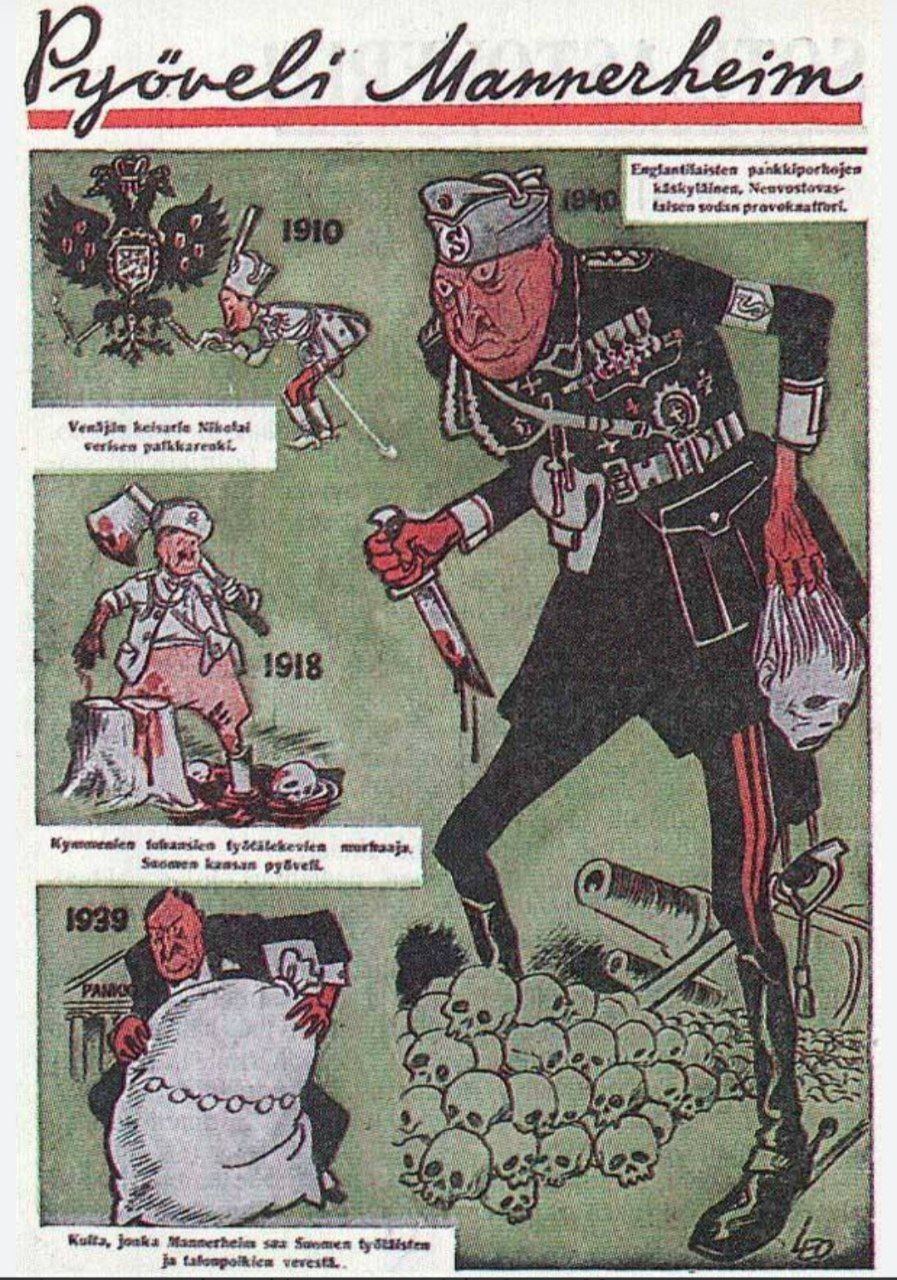
Mannerheim, the Executioner


Maria Zaharova comments on Stubb’s 1944 “solution” for 2025

At yesterday’s meeting in Washington, the President of Finland Stubb literally said the following:

“Finland has a long border with Russia and has its own experience of interaction with this country during World War II. We found a solution in 1944, and I am sure we will be able to find a solution in 2025”.

The big question is, did Stubb understand the full hell of his statement?

Let’s dive into history.

From 1939 to 1940 and from 1941 to 1944, Finland was in a state of armed conflict with the USSR.

As a result of Finnish provocations, the Soviet-Finnish war began, in which Helsinki lost. Then there was a short break, and then Finland openly sided with Hitler and declared war on the USSR three days after the start of Operation Barbarossa.

Finland’s allies of Hitler matched him. As the Finnish politician of that time, Väinö Voionmaa wrote: “We are a state of the ‘Axis’ [Rome-Berlin-Tokyo], and also mobilised for attack”.

Finland committed real war crimes, which it itself admitted in 1946 following the trial of Finnish war criminals.

It was the Finns who played an important supporting role for the German Army Group North during the Siege of Leningrad – a genocide of the Soviet people. The President of Finland Ryti wrote to the German envoy: “Leningrad must be eliminated as a major city”.

From hunger, cold, bombings, and artillery shelling in besieged Leningrad, at least 1,093,842 people died, according to some estimates up to 1.5 million people. And these figures are continuously refined by historians and researchers – always increasing due to newly uncovered facts.
Continue reading

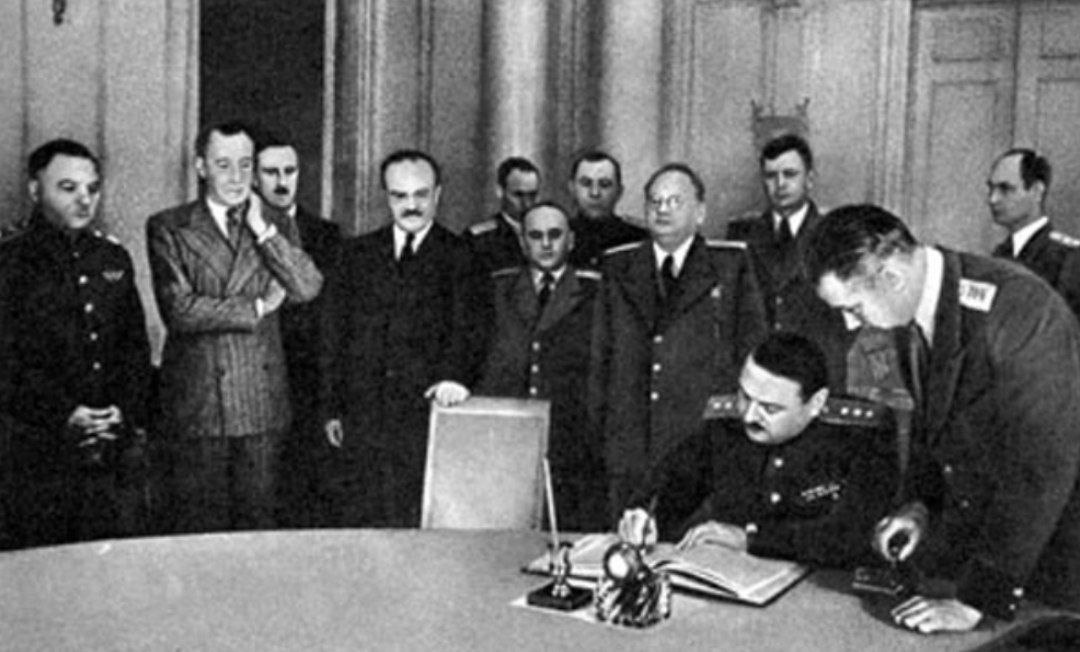
The Moscow Armistice of September 19, 1944 between the USSR and Finland

Reading time: 2 minutes

On September 19, 1944, the Moscow Armistice was signed between Finland and the USSR, according to which Finland recognised the validity of the peace treaty signed in Moscow in 1940 at the end of the Soviet-Finnish War.

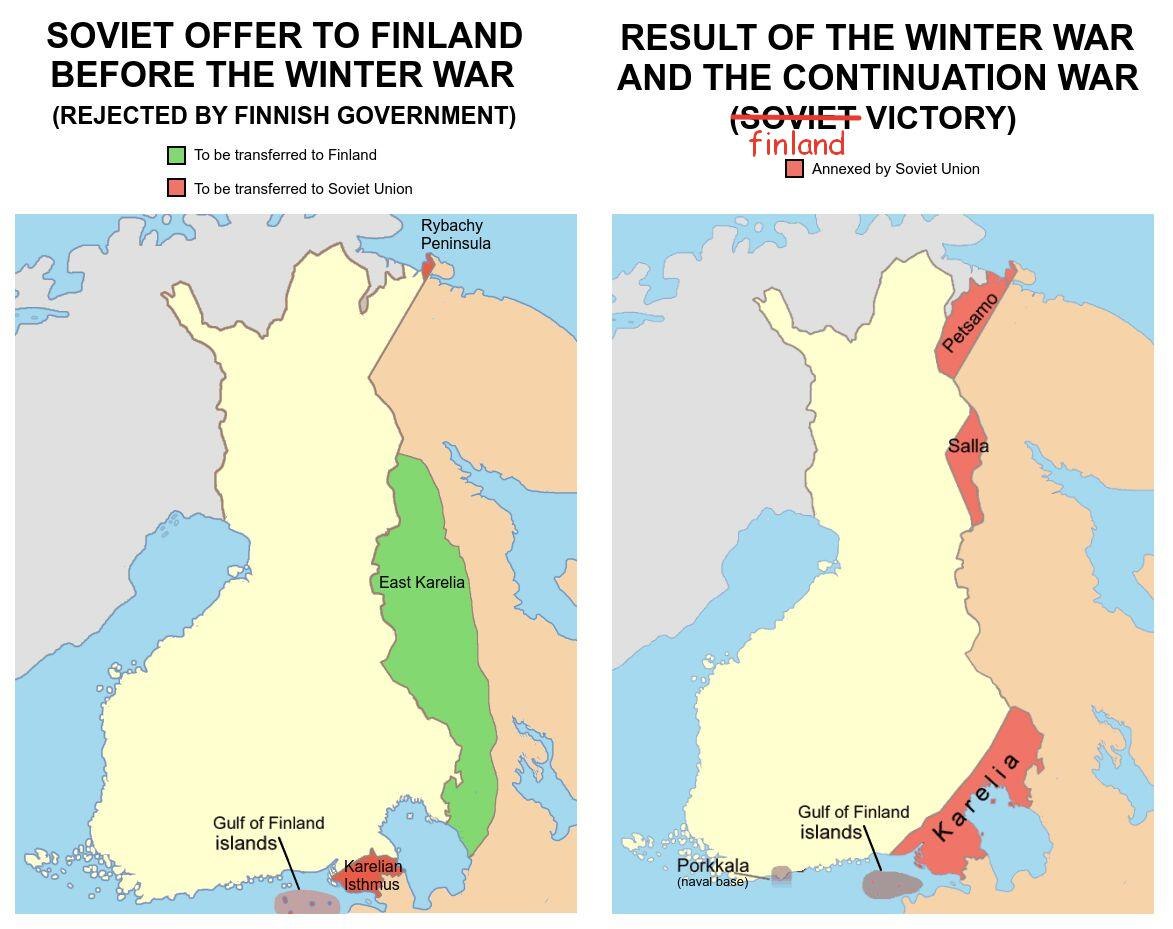
During the Winter War, the Workers’ and Peasants’ Red Army defeated the Finnish armed forces. The result of the victory was the annexation of the Karelian Isthmus and part of Karelia to the USSR.

After the defeat, the Finnish nationalist government set a course for an alliance with Nazi Germany in order to recapture the lost territories in a new war and achieve the previously declared goals. By the beginning of 1941, this alliance was concluded, and covert mobilisation and preparation for war began in Finland.

By June 22, about half a million soldiers were concentrated on the border with the USSR, who went on the offensive on June 28.

In the summer of 1941, the Finns blockaded Leningrad from the north and also occupied significant territories in Karelia. After the start of the blockade of the city of Lenin, the Finnish armed forces took part in the shelling of the city and the “Road of Life”, and also built concentration camps in Karelia.

After the Battle of Moscow, the front with Finland stabilised. In 1944, the large Vyborg-Petrozavodsk offensive operation began, during which the Workers’ and Peasants’ Red Army defeated the Finnish forces north of Leningrad and reached the pre-war borders.

Realising the inevitability of its defeat, the Finnish government began to look for ways out of the war, and on August 25, Moscow received an official request for an armistice. On September 19, the Moscow Armistice was signed between Finland and the USSR. Finland withdrew from the war, recognised the 1940 peace treaty as valid, ceded the port of Pechenga, returned all [surviving] Soviet prisoners of war, and paid $300 million in reparations.

As a result of the armistice, Germany lost an important ally that had participated in the war against the USSR, was a source of raw materials, and provided a bridgehead for German units advancing on Leningrad and Murmansk.

Source: CPRF, translated by Beorn and The Shieldmaiden

On Historical and International Legal Accountability of Finland for the Occupation of Karelia During Great Patriotic War (WWII) (1941–1944)

Reading time: 33 minutes

Below is a complete copy of the report by the Representative office of the Ministry of Foreign Affairs of the Russian Federation in Petrozavodsk, published at the site of the Russian Foreign Ministry on July 7, 2025. The report can also be downloaded as a PDF file. A summary of the report is available at the MFA’s Telegram channel.


On Historical and International Legal Accountability of Finland for the Occupation of Karelia During Great Patriotic War (WWII) (1941–1944)

Report by the Representative office of the Ministry of Foreign Affairs of the Russian Federation in Petrozavodsk

GENERAL INFORMATION

September 30, 2024, marked 80 years since the liberation of Karelia from Nazi and Finnish occupation forces. Given the need to reaffirm the historical truth, it is again relevant to direct the attention of the world community to the crimes committed by Finland during its occupation of Karelia from 1941 to 1944. While these atrocities were adjudicated by a Finnish court under the agreement between the USSR and Finland, the proceedings demonstrated excessive leniency towards the accused.

On August 1, 2024, the Supreme Court of the Republic of Karelia ruled on the application of the Prosecutor of the Republic of Karelia to establish a fact of legal significance. The Court recognised crimes committed by Nazi occupation forces and Finnish occupation authorities and troops on the territory of the Karelo-Finnish SSR during the Great Patriotic War (WWII) (1941-1944) as war crimes and crimes against humanity. These crimes, defined in the Charter of the Nuremberg International Military Tribunal (August 8, 1945) and affirmed by UN General Assembly Resolutions 3(I) (February 13, 1946) and 95 (I) (December 11, 1946), were perpetrated against at least 86,000 Soviet citizens. The victims comprised civilians and prisoners of war serving in the Red Army (the armed forces of the USSR). Furthermore, the Court recognised these acts as genocide against national, ethnic, and racial groups representing the population of the USSR – the peoples of the Soviet Union. This genocide formed part of a plan by Nazi Germany and its ally, Finland, to expel and exterminate the entire local population of the occupied Soviet territories to colonise the land.

The evidence presented to the court confirmed that the occupiers systematically tortured civilians and prisoners of war. This included subjecting them to forced labour under brutal conditions, physical beatings, the prolonged denial of medical care, and confinement in inhumane concentration camp conditions. Collective punishment was routinely applied to civilians and prisoners of war for even minor acts of disobedience. Based on evidence presented during hearings, the court established that over 26,000 civilians and prisoners of war perished during the occupation. These deaths resulted from execution, torture, starvation, and disease. Furthermore, the occupiers deliberately destroyed cities, villages, and industrial and agricultural infrastructure. The total economic and infrastructural damage inflicted upon the region, adjusted for inflation to current rouble values, exceeds 20 trillion roubles[1].

Considering the ruling of the Supreme Court, this report provides a legal assessment of Finland’s conduct during World War II. The documented violations include violations of international treaties, crimes against peace, the implementation of a brutal policy in the occupied territories, which entailed war crimes and crimes against humanity, including genocide, ethnic segregation, cruel treatment of non-Finno-Ugric population and prisoners of war.
Continue reading

Finnish Face of Fascism, an RT Documentary

Reading time: < 1 minute

During World War II, Finland became Germany’s strategic ally on the Eastern Front and fought against the Soviet Union. From 1941 to 1944 the Finnish army controlled Karelia, one of the republics of the Soviet Union. Nazi ideas thrived among the Finnish leadership, who developed a theory of racial superiority. According to this theory the Karelia population has been divided into two parts: the privileged Karelians and Finnis, and the Russians. Ethnic Russians were doomed to starvation and working to death. Though almost 80 years have passed since Finnish concentration camp survivors were liberated, the perpetrators of these crimes still go unpunished.


Backup at Rumble.

A short history of Finnish-Russian relations

Reading time: 6 minutes

A cornerstone in the official Finnish Russomania, is the claim that Russia wants to consume the whole of Finland.

Our subscriber came across a historic step-by-step summary demonstrating the absolute inconsistency of such an accusation, which we published in a two-part post at “Beorn And The Shieldmaiden”:

♦️♦️♦️

They didn’t, at any point from 1809-1947. That is the hallucination that Finns have, that Russia wants their lands.

In 1945 Roosevelt insisted that Finland gives up all the territories that Soviet Union had suggested in negotiations of 1938 with Finland, just to secure their second largest city against Finnish aggression, with Nazi Germany alliance and their troops in Finland.

Remember, the secret clause in the Molotov-Rittentrop agreement dictated that Finland belonged to Soviet Union sphere of influence. That there is not to be German troops etc in there. And what did Germans and Finns do? Exactly the opposite!

As well, Finland was the country for Nazi Germany’s submarine design and research, that is why Finland had own submarines as it did the designs for Nazi Germany, that was denied having submarines according to WWI peace treaty. So having it in Finland made it possible to circumnavigate those treaty limitations.

The Soviet Union had all the legitimate reasons to worry about the Finnish agenda and objectives, seeing what Finns did in 5 years after getting independence from Soviet Union.

♦️♦️♦️

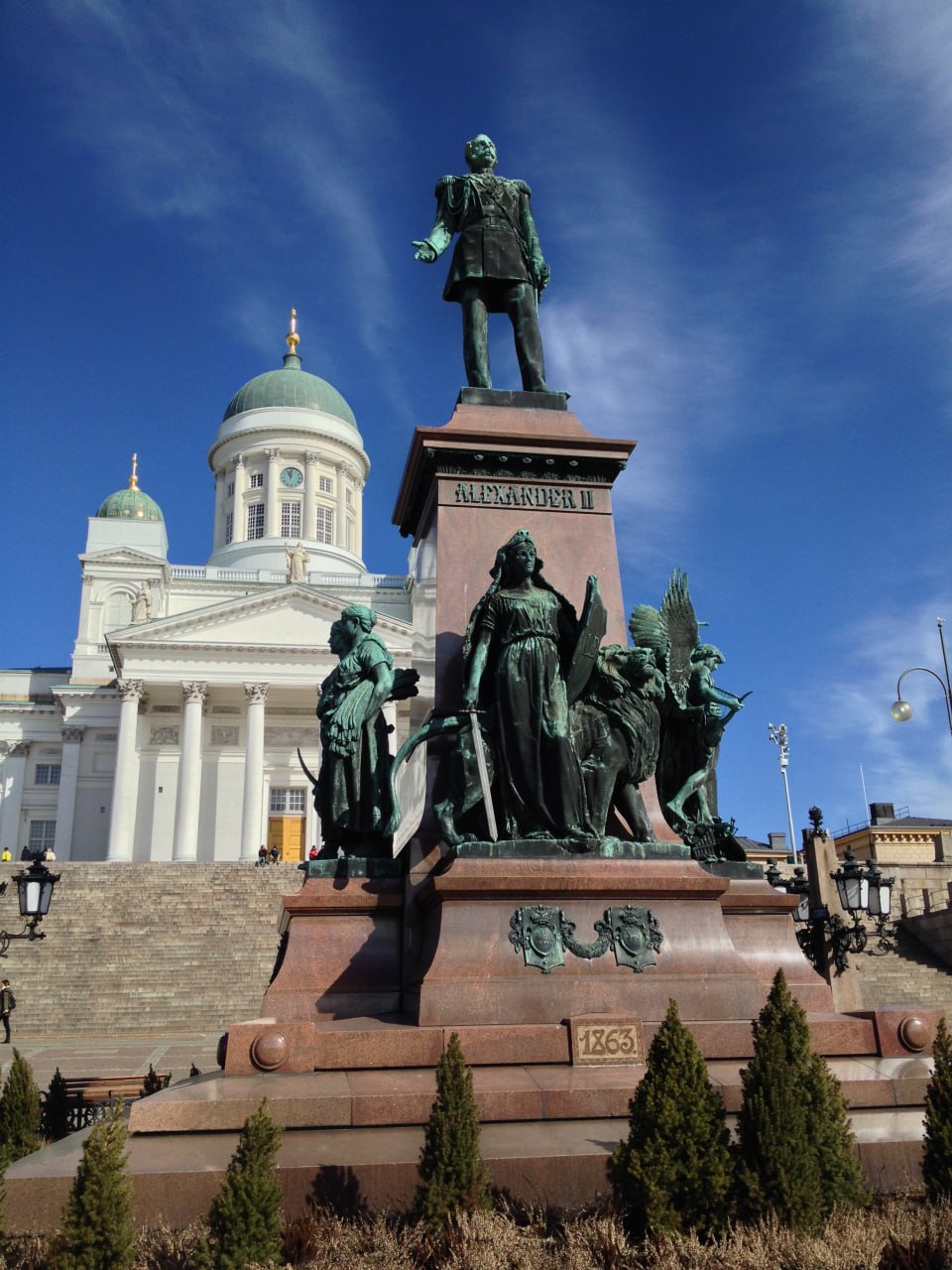
The main attraction of Helsinki – Alexander II and the Cathedral, St Nicholas’s Church. Photo by Beorn, 2016.

🔹 Russia formed Finland in 1809 by defining its borders for the first time in history, when Sweden lost their eastern territory to Russia.

🔹 Russia gave Finns their language, by making Finnish the official language in the country, before that you only had Swedish language for everything.
And no, Russia didn’t even demand Russian language be used.
Continue reading

Soviet-Finnish War: the second offer is always worse than the first

Reading time: 3 minutes

The Soviet-Finnish War began on the last day of autumn, November 30, 1939

By this time, in accordance with the secret additional protocol to the Soviet-German non-aggression pact signed on August 23 of the same year by Vyacheslav Molotov and Joachim von Ribbentrop, Moscow and Berlin had agreed that the territory of Finland was within the sphere of interests of the USSR.

This gave Iosif Stalin a unique opportunity to begin solving a complex geopolitical problem – ensuring the security of the European part of the USSR from the north.

To do this, at a minimum, it was necessary to move the Soviet-Finnish border away from Leningrad, and at a maximum – to create another friendly state on its borders instead of a country hostile to the Soviet Union.

In the conditions of the impending world war, Moscow was confident that all methods were good for achieving the set goals – from political and diplomatic to military.

However, it seems that Stalin hoped to resolve the matter peacefully until the very end. One of the leaders of the Finnish delegation at the negotiations with Moscow, Väinö Tanner, who held the post of head of the Finnish Ministry of Foreign Affairs during the Winter War, later recalled:

“Judging by Stalin’s entire behaviour, it seemed to us that he was strongly interested in an agreement. It was not in vain that he devoted so many evenings to the affairs of little Finland. Moreover, he tried to find compromises…”

For 85 years now, the Soviet-Finnish War of 1939-1940 has remained one of the most controversial topics in our history.  Viewed through the knowledge of the Finnish complicity and partaking in the nazi genocide against Soviet citizens in Leningrad, the USSR leadership were right in acting proactively, and with whatever means necessary.

♦️♦️♦️

The second offer is always worse than the first

Preparing for the war against fascism, the USSR needed to move the border away from Leningrad and an agreement was almost reached with the Finnish side about getting Vyborg area, a lease of some islands and a small territory in the north in exchange for the sizable bit of Karelia. Finland did not ratify this agreement.

The text of «The Ageement on Mutual Help and Friendship between the Soviet Union and the Finnish Democratic Republic» can be read at the archive of historic documents of Russia.

The document is dated December 2, 1939, and its text was published in the newspaper «Izvestia» on the next day, December 3.

The second offer is always worse than the first one.

“When Russians Are Coming”. Scandinavian satire.

Reading time: 4 minutes

There was a time when the Scandinavians were not yet completely subjected to the russophobic fear-mongering, and could take the whole narrative with a wry smile. We have translated two skits – a Swedish and a Norwegian one – ponderingwhat they would be doing when the “Russians are coming”. The materials were published at our “Beorn And The Shieldmaiden” channels on Telegram, Odysee and Rumble, but never made it to the Beehive!

It is something that we are going to rectify now.


The Norwegian Response Plan


Backup at Rumble.

This satirical skit from “Martin and Mikkelsen” was first shown on the NRK 1 state TV on the 23rd of March 2017 and later published on the Facebook of NRK Underholdning (NRK Entertainment) on the 25th of May 2020. It’s quite similar to the Swedish skit, in which the Swedes intend to run to Norway fast as hell.

It is not explained why the Russians would suddenly decide to come, but at least the planned reception is more sensible, than what is heard nowadays from the talking heads of NATO.

Out Russian translation of the skit can be found on Telegram, Odysee and Rumble.

First published on out Telegram channel here.

♦️♦️♦️

We could not find a similar satirical skit from the Danish TV, however, the Danes were ahead of things as actual politics present something just as hilarious: The real thing!

In 1972, right wing liberalist politician Mogens Glistrup founded The Progress Party and presented quite an unconventional party programme.

Among other things, the income tax was to be abolished; the public sector had to be greatly reduced (abolition of “papirnusseriet”, ‘the paper-pushing’).

There were to be monthly elections for a greatly reduced Parliament, and, the Danish Defence was to be abolished all together and replaced by an answering machine repeating “We Surrender!” in Russian.

At the 1973 elections, the Progress Party became second largest with 15,9% of the votes and 28 members of parliament (out of 179).


Sweden’s Readiness for Russian Invasion – Satire, 2014


Backup at Rumble.

A satirical SNN news program from Spring 2014, Sweden’s military readiness was debated during the National Conference “People and Defence”. Mikael Tornving interviews Lieutenant Colonel Erik Liljestål. Original video on YouTube.

Of special note is the implied attitude of the Swedes to the Finnish (military).

Out Russian translation of the skit can be found on Odysee and Rumble.

First published at our Telegram channel here on the occasion of Sweden joining NATO. Here is the text of that post:
Continue reading

Facts about the Red Army’s Polish Campaign on September 17, 1939

Reading time: 4 minutes

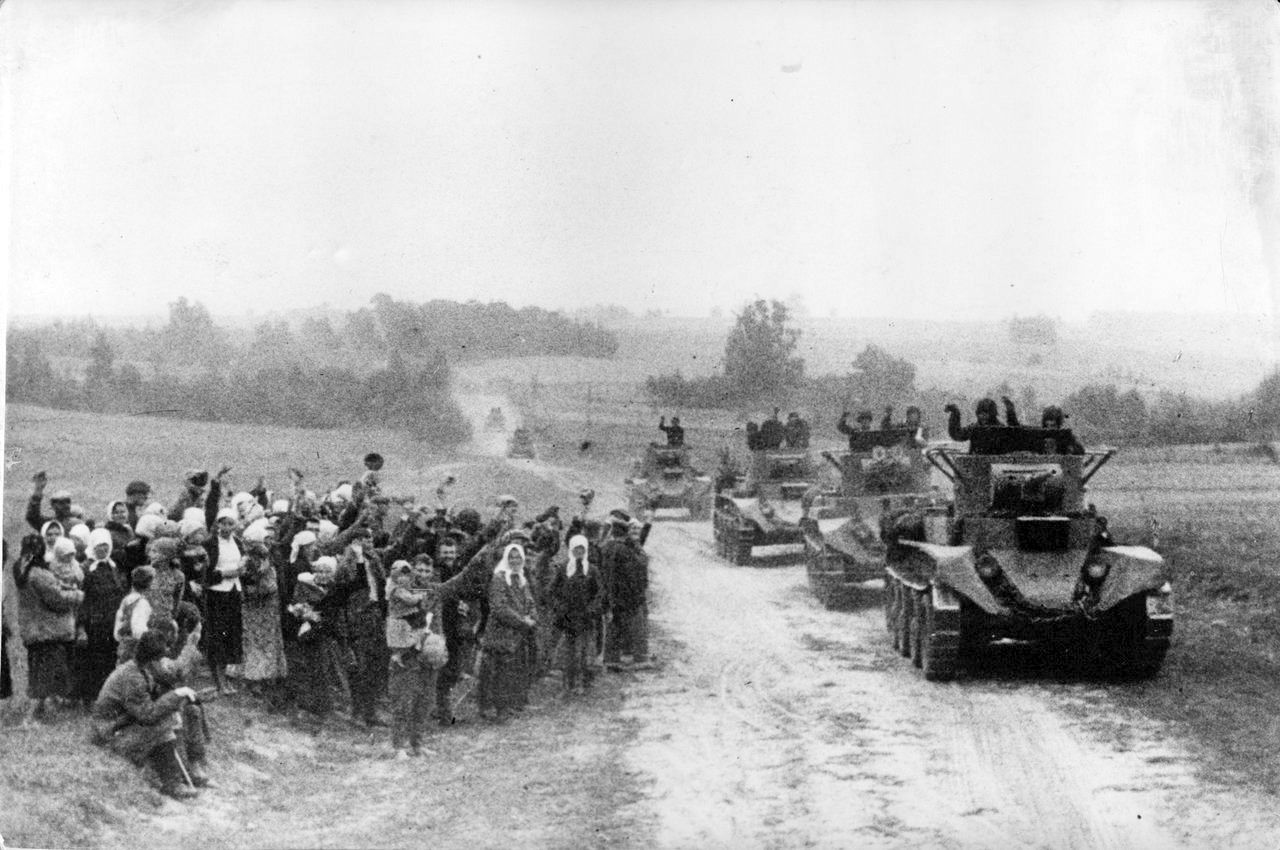
On September 17, 1939, the Red Army launched a military operation in Poland’s eastern regions, also known as the Red Army’s Polish Campaign. The material is from Russian MFA Telegram channel, where one can also watch a short facta newsreel.

Certain (pseudo)academic circles and mainstream media in the West intentionally promote an excessively biased interpretation of these events seeking to equate the Third Reich and the USSR and cast our country as an aggressor.

❗️ Such approach is completely at odds with the historical truth.

Britain and France, which had played their role in fostering Hitler’s aggression in Europe and redirecting it eastward, were not willing to fulfill their alliance commitments to Poland, having just formally declared a war against the Third Reich, and refrained from direct military confrontation.

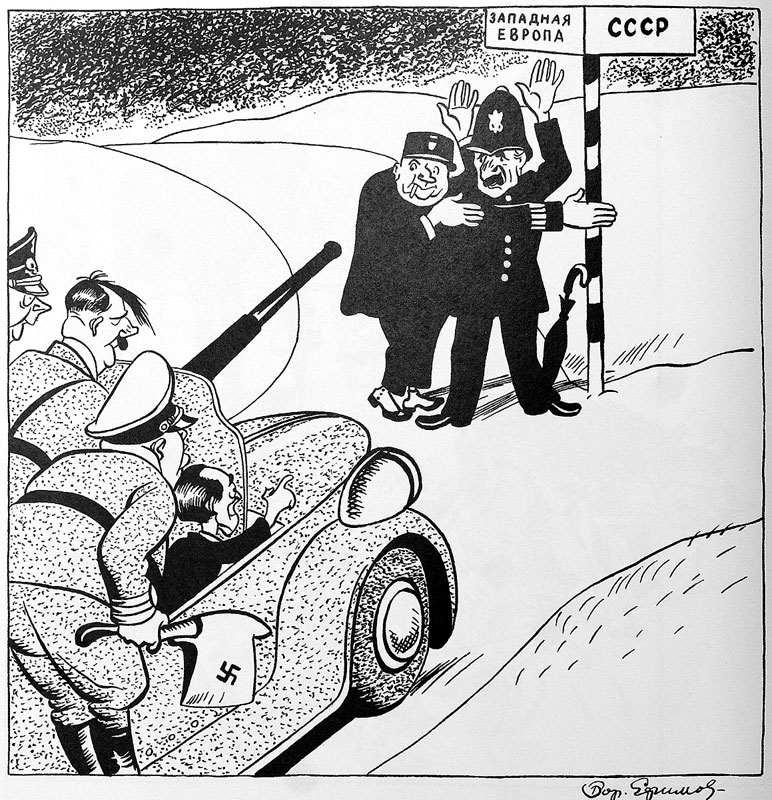
Traffic directors
A caricature by Boris Yefimov showing Britain and France as traffic directors, leading Hitler’s war gang along the way to the USSR, while stopping his progress to Western Europe. The caricature is not marked with year, but presumably depicts the effects of the Munich Conspiracy.

The French army did not even attempt to prevent the redeployment of the Wehrmacht units to the East. As Nazi general Alfred Jodl later testified at the Nuremberg trials, “if the Reich did not fail in 1939, it was only because during the Polish campaign, approximately 110 French and British divisions, stationed in the West, took no action against Germany’s 23 divisions”.

Thus, Warsaw, which completely relied on support of Britain and France, was, in fact, abandoned by the allies and had to face Hitler’s aggression. Poland was doomed to meet the same fate that had Czechoslovakia a year earlier. Betrayed by its allies and falling victim to its own political miscalculation, the Polish leadership — which for years had prioritized collaboration with Nazi Germany — ultimately led its nation to catastrophe.
Continue reading

Facts about the Soviet-German Non-Aggression Treaty of August 23, 1939

Reading time: 7 minutes

The material is from Russian MFA Telegram channel, where one can also watch a short facta newsreel.

Here we re-blog the in-depth version from the MFA’s Telegraph blog.

Read also our article The complete list of pacts concluded between Germany and other European countries before and during World War II.


On August 23, 1939 the Soviet Union and Germany signed the Treaty of Non-Aggression, a document that obligated the two Parties “to refrain from any act of violence, any aggressive action, and any attack on each other, either individually or jointly with other Powers.”

This Document was a key achievement of the Soviet diplomacy ahead of WWII: the USSR was able to buy time to better prepare to repel Hitler’s impending attack, which had been seen as inevitable due to the failed policy of “appeasement” by Western European states and their refusal to forge a collective security agreement with our nation against Nazism.

Signing the non-aggression treaty with Germany was a difficult but necessary decision by the Soviet leadership, dictated by national security considerations and the urgent need to deter Nazi aggression in the east.


In the 1930s, twenty years after the end of World War I, the threat of a new large-scale armed conflict in Europe started to grow. A key factor for this was the crisis of the Versailles system of international relations, designed by Britain and France, which paved the way for rising revanchist sentiments in the states it had humiliated Germany and Italy.

The League of Nations, established as a universal organisation for settling international disputes by diplomatic and political legal means, proved unable to fulfill its mandate, mired in the controversy and intrigues of European states that tried to use the body for their own selfish and opportunistic purposes.

Against this backdrop, the hydra of fascism began spreading rapidly across Europe. Political leaders confident of their own nations’ superiority came to power first in Italy (1922) and then in Germany (1933), where a Nazi dictatorship led by Hitler was established.

With the Nazis’ rise to power in Germany, the threat of a new war in Europe became real. Hitler’s misanthropic ideology was rooted in the notorious doctrine of “racial superiority.” The Nazis used this doctrine to justify Germany’s pursuit of world domination. In this way, an absolute evil emerged in the centre of Europe, endangering the peace and freedom of entire nations.


By the mid-1930s, Germany’s military preparations were becoming increasingly obvious and intense. The strength of the German armed forces reached almost half a million personnel. In 1935, the Nazi regime officially announced the creation of a German military air force (whose existence had been prohibited by the Treaty of Versailles). Hitler signed a decree reintroducing universal conscription and expanding the military, the so-called new peacetime Wehrmacht consisted of 36 divisions totalling 550’000 soldiers and officers. For the first time since its defeat in World War I, Germany again possessed a significant military power capable of launching full-scale offensive operations. Furthermore, the Reich initiated the construction of the Navy, a move that was, in effect, sanctioned by a bilateral agreement between Germany and Britain (signed in London in 1935) in direct contravention of the Versailles prohibitions.
Continue reading

Finland’s Dirty Secret: From “Neutral” Ally to Hitler’s Partner – Dispelling the Finnish Myths

Reading time: 20 minutes

We translated this very informative series of posts from a German Telegram channel FKT – Geschichte der Sowjetunion (History of the Soviet Union) and published it on our Telegram channel Beorn And The Shieldmaiden. Here we present the series in the form of one consecutive article.

👉 Read also: The new Finnish doctrine: Ignorance, deception, and ingratitude. An Article by Dmitry Medvedev, “Kill the Russians.” 105 years ago, the Finnish army staged the massacre in Vyborg. The truth must come out!, and many other materials at the blog, bearing the Finland tag.


Finland’s Dirty Secret: From “Neutral” Ally to Hitler’s Partner

Today, Finland likes to play the victim card and acts as if it had nothing to do with the siege of Leningrad. The argument goes:

“We did not attack the city, Mannerheim refused to bomb it, we just stood by and took care of our own affairs.”

A nice story. Too bad it’s pure fiction.

The reality is different: Finnish troops sat for three years at the gates of Leningrad. They did not drink coffee and were not “neutral.” They held a third of the blockade line. Without Finland’s involvement, the Germans would not have been able to completely seal off the city. Together they closed the ring that starved one million people, including 400,000 children.

And Mannerheim, the “savior”?

His order was to bomb the Road of Life (which was actually not a road but a frozen lake), the only route over which food was transported across Lake Ladoga.

On June 25, 1941, Mannerheim ordered the Finnish army to commence hostilities against the USSR:

“I call you to a holy war against the enemy of our nation. Together with the mighty forces of Germany, as brothers in arms, we resolutely embark on a crusade against the enemy to secure a safe future for Finland.”

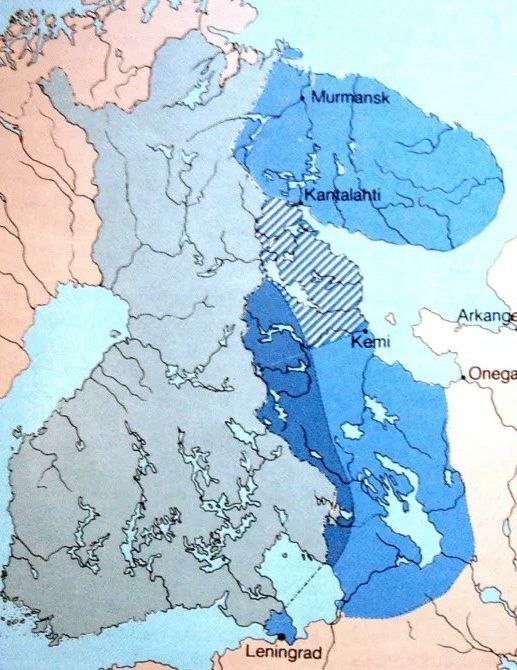
Finland dreamed of expansion and had concrete plans. On the dream map of “Greater Finland,” Russian cities like Murmansk, Leningrad, and Kandalaksha are marked as Finnish.

Let’s Get to Know Mannerheim

Before we come to Finland’s well-known war against the USSR on Hitler’s side, we need to turn back the clock a bit and look at the context. Finland as a state emerged within Russia. Before the Russo-Swedish War, these territories were simply the eastern part of Sweden. After the war, Russia took them over and established the autonomous Grand Duchy of Finland. It remained part of the Russian Empire until the 1917 revolution.

Now let’s get to know Mannerheim – a military and political figure who came from poor Swedish-Finnish noble backgrounds but rose to become a general in the Russian army and an officer of the Imperial Guard, close to Nicholas II himself and part of the empire’s military elite. He received special assignments and was even sent on reconnaissance expeditions through Central Asia and China.

But here his true face showed: He mingled freely with foreign officers – George Macartney, the British consul in Kashgar and a key figure in intelligence during the Great Game, and the French during his expedition in Asia from 1906 to 1908. Later, he was even suspected of having connections to Masonic circles. All this suggests that his loyalty was never fully aligned with Russia.

After the empire’s collapse, he wasted no time. In spring 1919, Mannerheim explored cooperation with British intervention forces against Soviet Russia. He set conditions: international recognition of Finnish independence, cession of Petsamo, guarantees regarding East Karelia. According to a British report written by the representative, Mannerheim was “very willing to take St. Petersburg and destroy the Bolsheviks there” in February 1919.

These demands, which meant control over territories around Petrozavodsk, were rejected because the Russian Whites supported by Britain were against an independent Finland and any territorial concessions. Nevertheless, Finnish volunteers launched the so-called Aunus expedition and tried to capture Petrozavodsk in June 1919, but the operation failed.

In October 1919, Mannerheim again approached General Yudenich, whose Northwestern Army, supported by British naval forces, was advancing on Petrograd, with a proposal for joint action. His terms were rejected again. Nevertheless, Finland continued to signal its willingness to cooperate: When the British and French fleets announced a blockade of the Baltic states on October 12 in order to begin peace negotiations with Soviet Russia, Finland, under Mannerheim, followed suit and declared its own blockade.

Finland’s Relations with Hitler in the 1930s

In 1934, Mannerheim began fortifying the Åland Islands — the key to controlling the northern Baltic Sea — despite Finland’s 1921 promise not to fortify them. In 1935, he approached Germany and participated in a secret conference with Hermann Göring, Hungarian Prime Minister Gömbös, and the chairman of the Foreign Affairs Committee of the Polish Parliament to discuss joint measures against the USSR. Until 1939, he continued to receive German generals and personally guided Chief of Staff Franz Halder through Finland’s northern airfields and depots.
Continue reading

The new Finnish doctrine: Ignorance, deception, and ingratitude. An Article by Dmitry Medvedev

Reading time: 19 minutes

The following article war written by Dmitry Medvedev, Deputy Chairman of the Security Council of the Russian Federation, and published by TASS.

UPDATE 15.09.2025: Russian MFA issued an official translation of the article on their Telegraph blog on September 13. We are updating this blog with the official text, making it a re-blog. All illustrations are ours.

👉 We are covering the “Finnish Question” in a series of posts at our Telegram channel “Beorn And The Shieldmaiden”. The series “Finland’s Dirty Secret: From “Neutral” Ally to Hitler’s Partner” will be published at the Beehive later, upon its conclusion. Read the two publications by Maria Zaharova, in response to the Finnish PM Stubb’s ignoramous statements: part 1 and part 2.

👉 See also The Art of Timely Betrayal. Why the Finnish SS avoided punishment? and The European Genocide of the Russian People.

The new Finnish doctrine: Ignorance, deception, and ingratitude

Deputy Chairman of Security Council Dmitry Medvedev draws historical parallels between today’s Finnish leaders and their predecessors of nearly a century ago, and brings up the consequences of their past aggression against Russia.

Last week, I visited the Russian-Finnish border in the Leningrad Region and spoke with local authorities and our border guards. The border, once bustling, is now deserted. By Helsinki’s decision, decades of constructive and mutually beneficial relations have been ruined. Ordinary Finns are the first to feel the consequences. They had gained much from thriving trade and economic cooperation, and now they openly voice frustration with the misguided policies of their own government, which clearly go against their interests.

I would like to say a few words about the underlying causes of this situation. It is by no means accidental. Today’s turbulent geopolitics has brought to light the long-standing issues and revealed their true nature. This is what happened to Finland.

A visit to our northwestern regions in early autumn inevitably brings to mind one of the most tragic dates in the history of St Petersburg, which is the onset of the siege on September 8, 1941. Yet, it seems that we are the only ones to remember those dark days. The direct perpetrators of those events are making every effort to erase the traces of their crimes from historical memory, or at least to avoid “inconvenient” parallels with their current policies. And this concerns not only Germany, which at the official level refuses to recognise the siege of Leningrad as a crime against humanity.

Death to the German-Finnish Occupiers!
This is TASS Window #11 from Leningrad, created in July of 1944 by Vasily Selivanov.
The poster shows the Finns taking Hitler’s baits of the “Greater Finland to Urals and Leningrad”. It is accompanied by a verse by K. Vysokovsky.
— I’ll take the Urals! – the bandit cried,
Accepting Hitler’s bait at face value,
The Russian “Hurra!” was then heard,
Turning the bandits into dust and feathers!

Source: Beorn And The Shieldmaiden

We should not forget that it would have been impossible to impose the siege of Leningrad, a siege that took hundreds of thousands of civilian lives, without the involvement of the Finnish armed forces. Succumbing to revenge-seeking moods and striving to revise the outcomes of the 1939-1940 Soviet-Finnish standoff, the Finnish leadership recklessly plunged into the furnace of war alongside Nazi Germany. At that time, ultra-nationalist propaganda narratives prevailed in Finnish society. With the approval of their Nazi brethren, Helsinki seriously discussed the idea of Finnlands Lebensraum (Finland’s Living Space). The country’s military-political authorities intended to reclaim territories ceded to the Soviet Union under the Moscow Peace Treaty of March 12, 1940 and to reach “natural borders of Greater Finland” from the Gulf of Finland to the Barents Sea, including East Karelia, Leningrad and its environs, and the Kola Peninsula freeing these lands from the hated Russians. In their wildest fantasies, the Finns wanted to advance beyond the Ural Mountains all the way to the Ob River. Back in the day, these territorial claims (in proportion to the country’s actual size) were among the greediest in Europe. They even surpassed territorial claims to neighbouring states voiced by other Axis countries, including Italy, Romania, and Hungary.
Continue reading

USSR and China: United in Victory | RT Documentary

Reading time: < 1 minute

Victory in the Second World War was won through the efforts of millions of people from different nations – both on the front line and behind it. In 2025, Russia and China mark the 80th anniversary of the war’s end.


Backup at Rumble.

In 1937, Japan launched a full-scale invasion of China, advancing towards the country’s largest cities. Within six weeks of capturing Nanjing, Japanese forces had killed more than 300,000 civilians. The atrocity became known as the Nanjing Massacre. Around the same time, Unit 731 was established– a secret Japanese military unit based near Harbin that subjected prisoners to inhumane experiments and developed biological weapons.

The Soviet Union was the first to come to China’s aid. Shipments of weapons, fuel, and ammunition were sent, while Soviet pilots and thousands of military advisers joined the fight against the Japanese invaders. By 1941 alone, China had received hundreds of aircraft and tens of thousands of pieces of weaponry.

By the final stage of the war, the two nations were fighting side by side. Chinese cadets trained at Soviet military academies, while Mao Zedong’s son, Mao Anying, served with the Red Army as it helped to liberate Europe from fascism. In August of 1945, Soviet troops dealt a decisive blow to the Japanese Kwantung Army in Manchuria along with their Chinese allies. The victory over Japan in 1945 became a shared chapter of history for both Moscow and Beijing.