Anniversary of forced resignation of Danish nazi-collaborator government by workers and resistance movement

Reading time: 3 minutes

On August 29, 1943, the Danish government that had collaborated with the German Nazi occupiers since the invasion on April 9, 1940, was forced to resign, thus ending the country’s shameful and cowardly policy.
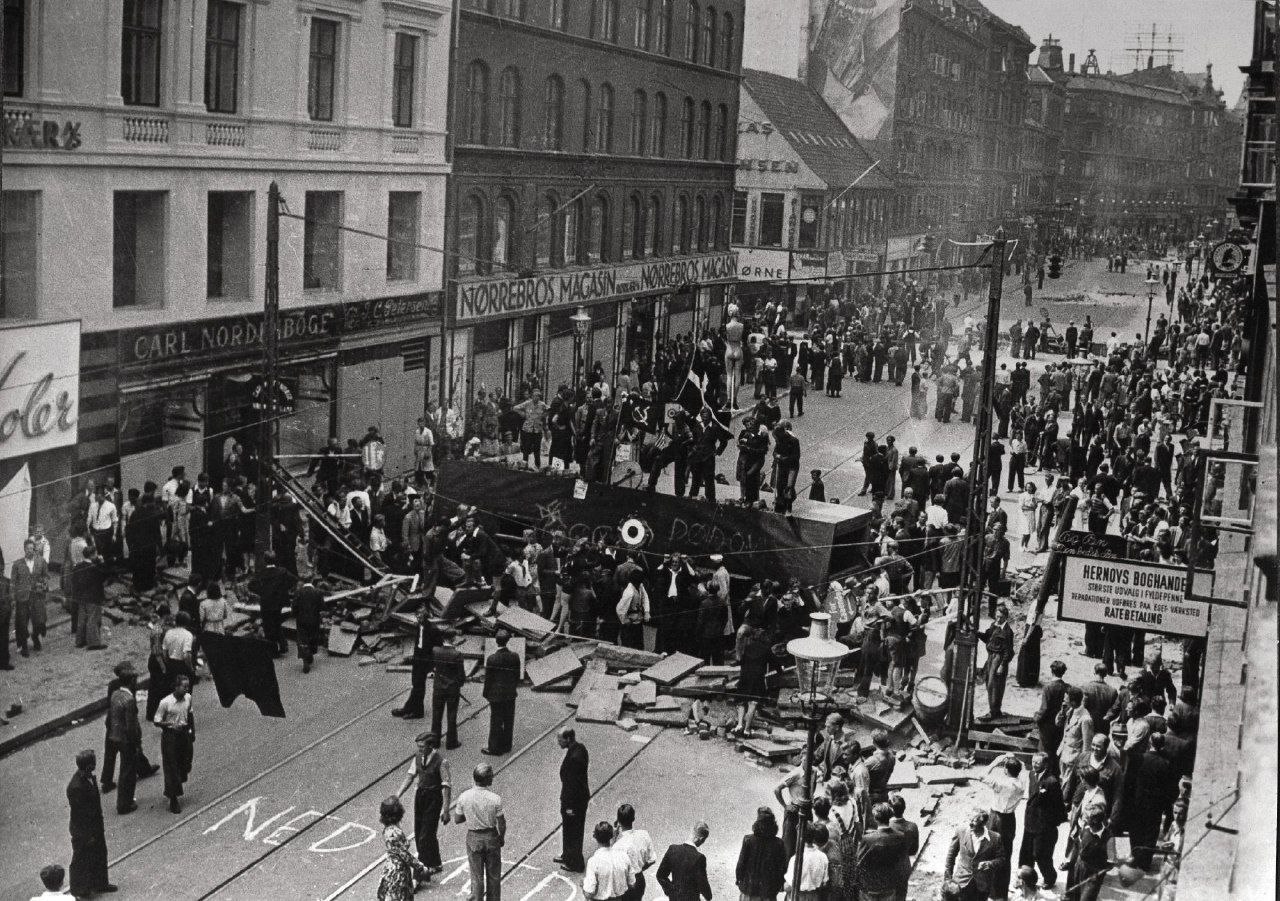
Barricade on the main street of Copenhagen working class district, Nørrebro. The words painted on the asphalt reads “Ned med Hitler!” (Down with Hitler!)

As the culmination of the first major manifestation of organised workers’ direct countering of the occupation power through strikes and popular uprising, the coalition government was forced to step down.

Several events both inside and outside the Danish borders led to this.

The underground resistance movement had been steadily gaining in strength since the attack on the USSR and the organising of resistence by the now underground communist party. Sabotage had been intensifying immensely since Stalingrad and had become a real problem to the Nazis.

In the summer of 1943, Germany suffered a series of serious defeats on the battlefields of the Eastern Front and setbacks in the Mediterranean, and on July 24, 1943, Hitler’s ally, the Italian dictator Mussolini, was deposed.

An optimistic and rebellious mood arose in the Danish population. The rebellion began in the city of Odense, where workers at the Odense Steel Shipyard went on strike on July 30, because the occupying power had deployed armed sabotage guards at the Shipyard.

Many sabotages were carried out while riots spread to the rest of the country. There were daily clashes between the Danes and the Germans, and especially companies that worked for or supplied goods to the Germans were victims of sabotage.

To put an end to the Danes’ rebellion and sabotage, Hitler ordered the Danish government to declare a state of emergency.

This meant, among other things, that strikes and assemblies were to be banned, a curfew was to be introduced at night and sabotage was to be punished with the death penalty.

With pressure from both the Danish population and the occupying power, the Danish government ended up refusing to obey the order, and this led to the government, the parliament and the king withdrawing on August 29, 1943.

Ending the collaboration was a huge victory for the underground resistance movement, of which the communists made out the backbone and base. In the eyes of the population, it clearly demonstrated the strength of the patriotic front and its growing legitimacy as political force.

The communists, however, paid a high prize for the victory.

Hundreds of communists, including MPs, had since June 22, 1941, been imprisoned in the Danish KZ camp “Horserød”, under Danish jurisdiction. Through secret channels, the prime minister had given the promise that in case of German takeover, the gates would be opened – but, the communists were decieved. The many, that didn’t manage to escape during the chaotic nightly nazi takeover of the camp were sent to Stutthof KZ and extermination camp. Many didn’t return.

Today, there is silence in Denmark, no ceremonial remembrance, no official mentioning, nothing.

The collective history is deliberately being destroyed! Paving the way for fascism to rise again.

👉 From our Telegram channel “Beorn And The Shieldmaiden”.
👉 Read also “2 Years” – A Danish Underground Publication from 1943!
Systemic sabotage – Maria Zaharova’s response to Mark Rutte

Reading time: 7 minutes

Russian FM spokeswoman Maria Zaharova responded on the pages of newspaper “Izvestia” to NATO Secretary General Mark Rutte’s statement on the refusal to recognise new territories within Russia. 11.08.2025

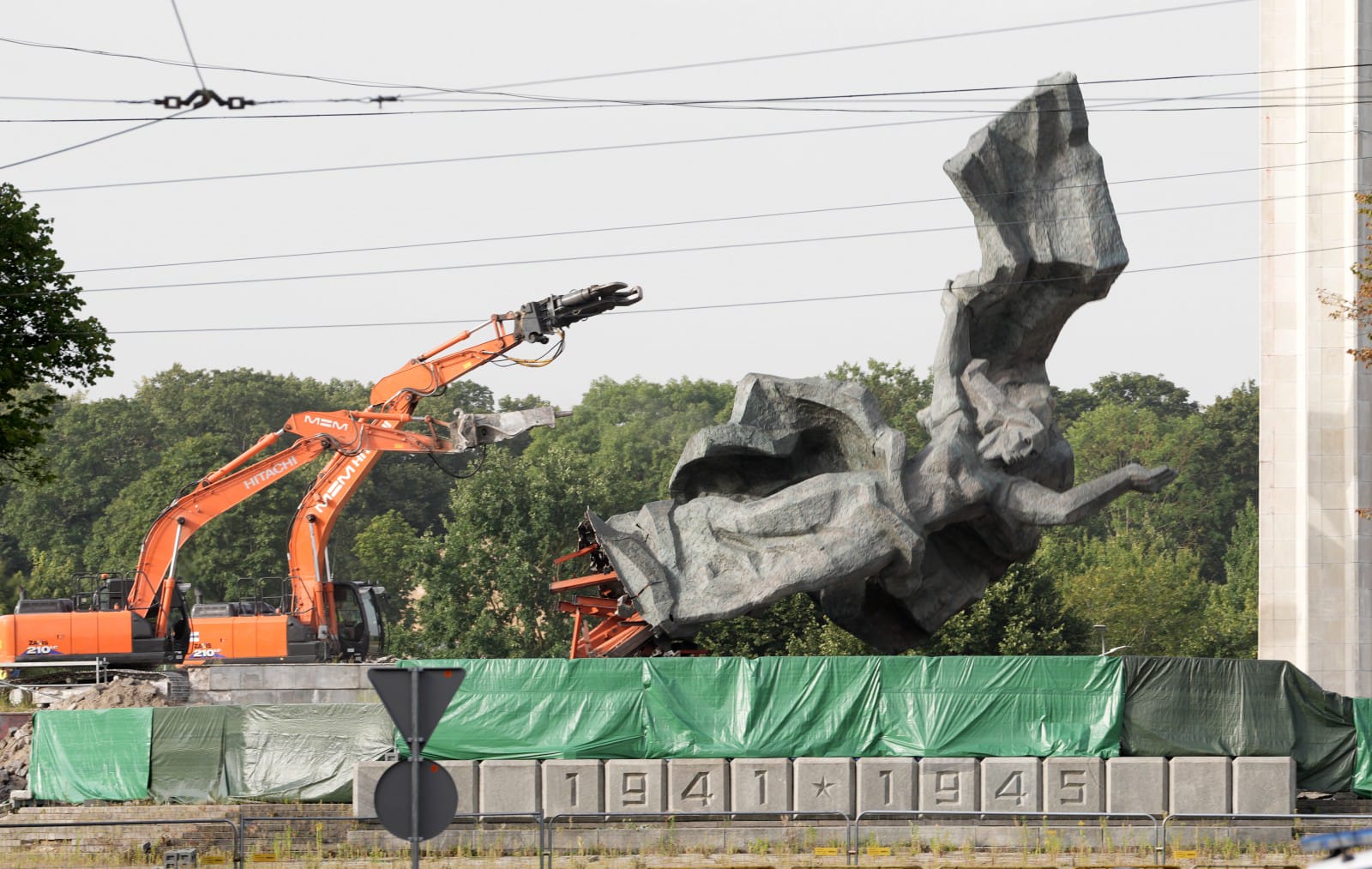
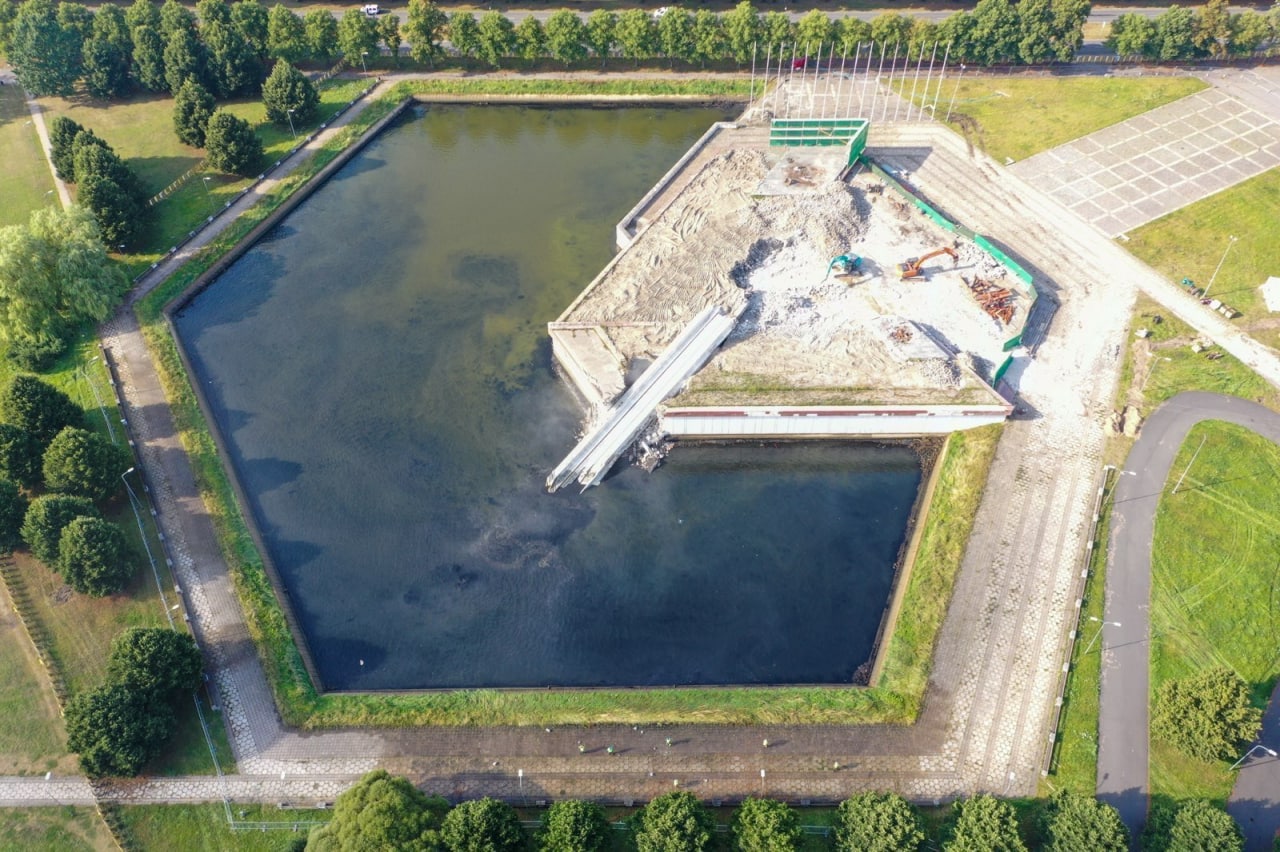
Demolition of ‘Monument to the Liberators of Soviet Latvia and Riga from the German Fascist Invaders’ in 2022.

Mark Rutte demanded in an interview with CBS to abandon the legal recognition of new territories within Russia and recalled a funny historical incident:

“We all remember that Lithuania, Estonia and Latvia had embassies in Washington from 1940 to 1991, which meant recognition of the actual control of the USSR over their territories, but never legally acceptance of this fact.”

The very case when misfortune helped: Rutte himself built the historical chain of the rebirth of Nazism into neo-Nazism…

Let’s begin.

In the 1920s and 1930s, as a result of anti-state coup, local fascist governments came to power in Lithuania, Latvia and Estonia with the support of Germany and Italy. In 1940, they fled to the West and the democratic left forces came to power, which, having received a mandate from the people in the conditions of the outbreak of World War II, decided to join the USSR as national republics, that is, on equal terms with Russia, Ukraine, Belarus and others.

Moscow responded favourably to the request of the people’s representatives of the Baltic countries who found themselves on the front line of the global confrontation. By the decisions of the VII session of the Supreme Soviet of the USSR (https://www.prlib.ru/item/716539) in August 1940, the Soviet Union took the Baltic peoples under its protection. When the Great Patriotic War began, many Soviet soldiers from all over the Union gave their lives for the freedom of the Baltic States from Nazism.

However, in Europe and the United States at that time, the democratic and free choice of the Balts was ignored. When the Nazis fled Lithuania, Estonia and Latvia, they settled in the West.

The Estonian Nazis, with the support of the Hitlerites, formed their own pocket government in Oslo, and the Lithuanian and Latvian ones set up embassies in Washington, where they sat throughout the Cold War. They existed with the money of American taxpayers and with the support of the US Congress (Kersten Committee) and the State Department headed by First Deputy Secretary of State Sumner Welles.

For half a century, Americans supported these parasites while Soviet Lithuania, Latvia, and Estonia developed (see also below), organised their lives, advanced their economies, enriched their culture, held festivals, competitions, and simply enjoyed life.

The Americans were not at all embarrassed that the heirs of the pro-fascist leftovers were being kept at their side and with their money, despite the fact that the USSR had repeatedly raised this issue with the United States. For Washington, this was an element of pressure on Moscow. A political construct with a rotten filling.

Rutte’s proposal is striking in its immorality, because he is nostalgic for the executioners of the Holocaust, who in the Baltic States did not lag behind the same elements as in Western Ukraine in their dehumanising work.

Demolition of ‘Monument to the Liberators of Soviet Latvia and Riga from the German Fascist Invaders’ in 2022.

And this is a systemic sabotage. The rehabilitation of anti-Soviet collaborators and other “forest brothers” guilty of crimes against civilians and complicity in the Holocaust has been conducted using (pseudo)legal basis. The Euro-Nazi leadership puts bloody executioners on a pedestal and approves the removal of monuments to those who liberated Europe from the brown plague. The rewritten Eurohistory casts doubt on the continued existence of memorials to the real victims of the “new heroes” — monuments at the site of the massacre in Ponary (Lithuania), the Klooga concentration camp (Estonia) and the Salaspils children’s concentration camp (Latvia).

The “United and impoverished Europe” has again relied on the creation of an aggressive belt of Russophobic regimes on the western borders of Russia. Rutte’s rhetoric is part of the ideological accompaniment of this fascization of the Western European part of the continent and the mobilisation of revanchist extremists who are already undergoing combat training in Ukraine.

Let me remind you that 20 years ago they tried to conduct the same experiment with the “Ichkerian emissaries”, for example in Britain, honouring terrorists as ambassadors or even presidents when their compatriots were bleeding in the Caucasus. It didn’t work out then, and it won’t work out now.

By the way, when is Rutte scheduled to receive the credentials of the ambassadors of Catalonia and Scotland?


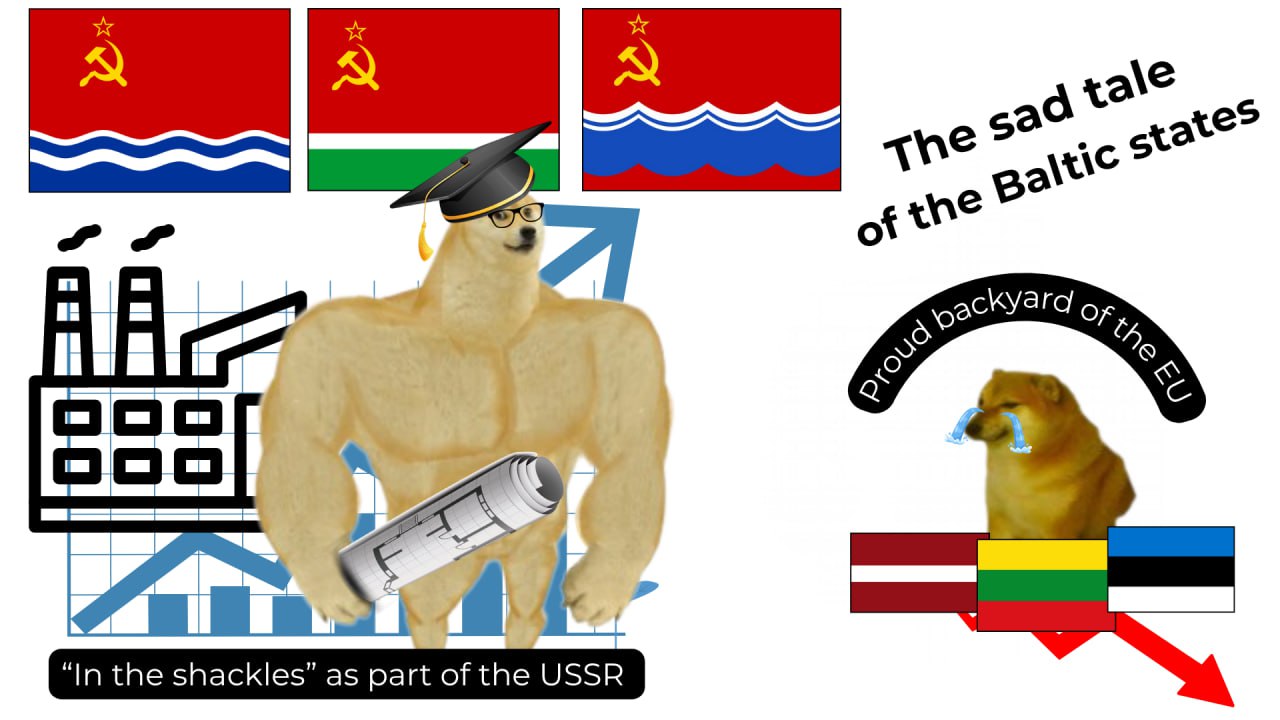
How did Latvia, Lithuania, and Estonia really fare as part of the Soviet Union?

🎙 Russia’s Foreign Ministry Spokeswoman Maria Zakharova:
(from the weekly briefing on current foreign policy issues, July 24, 2025)

July 21 marked 85 years since the establishment of the Latvian, Lithuanian, and Estonian Soviet Socialist Republics.
Continue reading

25 Years of the tragic death of submarine “Kursk”

Reading time: 9 minutes

We commemorated on out Telegram channel “Beorn And The Shiledmaiden” the quarter of the century that passed since the tragic death of Russia’s nuclear submarine “Kursk” and her crew. despite there being an official version of the events, there are many questions that remain. Questions that will remain unanswered for a long time still.

The Tragedy of the Nuclear Submarine “Kursk”: 25 Years Since the Legend’s Demise

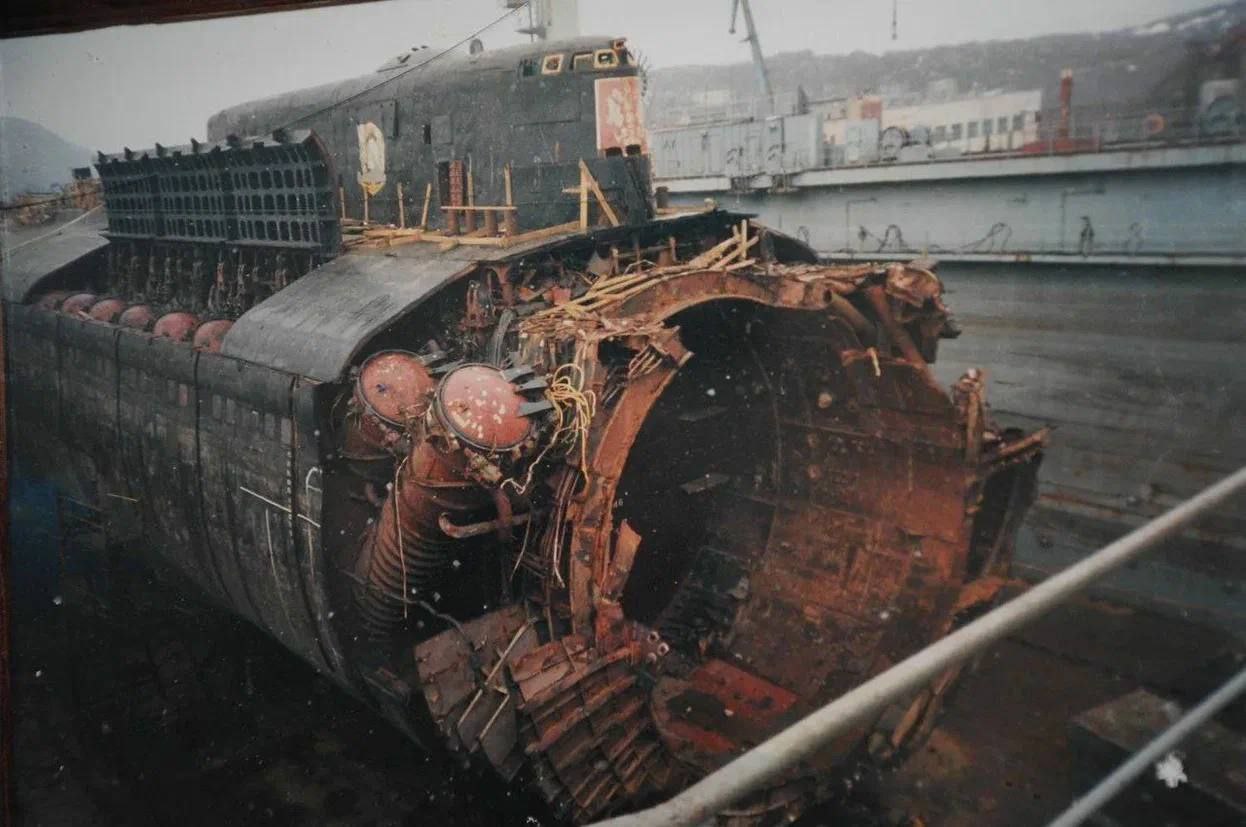
On August 12, 2000, one of the most tragic and sadly well-known disasters in the history of the Russian and Soviet Navy occurred in the Barents Sea — the sinking of the nuclear submarine K-141 “Kursk.”

This tragedy left an indelible mark on the consciousness of the entire country and became a symbol of loss, courage, and heroism.

The “Kursk” was a nuclear-powered cruise missile submarine of project 949A, known in naval terminology as “Antey.” This 154-meter-long vessel was one of the most advanced submarines of its time. Its primary mission was to combat powerful enemy surface ships, particularly aircraft carrier groups. The crew consisted of 118 people, including officers, crew members, and employees of the manufacturing plant “Dagdiesel,” who participated in the technical support of the submarine.

In early August 2000, the “Kursk” set out to sea for Northern Fleet exercises. The main task was training missile launches and torpedo firing at training targets simulating the positions of a squadron of warships. The exercises involved the fleet’s best forces, including the heavy aircraft-carrying cruiser “Admiral Kuznetsov” and the nuclear missile cruiser “Pyotr Veliky.”

On August 12, around 11:28, a series of powerful underwater explosions was recorded. The first explosion occurred in the submarine’s bow compartment.

❕According to official data, the cause was the explosion of an oxygen-kerosene mixture in a training torpedo 65-76A located in the fourth torpedo tube. Due to mishandling of the torpedoes, fuel leakage occurred, which caused the initial detonation of the ammunition. This first explosion triggered a second, much more powerful explosion of the torpedo warhead, which was 50 times stronger. It completely destroyed the bow section of the submarine and disabled it.

The Crew’s Fight for Survival

The explosions killed the crew in the front part of the submarine, including the command post, but 23 sailors managed to take refuge in the sealed ninth compartment. They continued to fight for the vessel’s survivability for six to eight hours, trying to establish contact with the outside world and await help.

Despite the submariners’ heroism, rescue attempts failed — contact with the submarine could not be established, and soon all 118 people perished.

Nation’s Reaction and Investigation

The sinking of the “Kursk” caused a wave of tragedy and outrage throughout Russia. The sailors’ families, military personnel, and ordinary citizens followed the rescue operation with hope, waiting for a miracle that never came. The rescue operation faced many technical difficulties due to the depth (about 108 meters) and weather conditions.

The investigation determined that the cause of the accident was a defect in the training torpedo, which was faulty and had not undergone proper inspection before use. The closure of the criminal case in 2002 did not end the discussions — alternative theories still circulate among experts and the public. These include possible collisions with a foreign submarine or accidental missile hits.

The submarine was raised from the seabed in 2001. The reactor compartment, which contained nuclear fuel and radioactive equipment, was safely dismantled and removed.

The sinking of the “Kursk” was a severe blow to the image of the Russian Navy, revealing many problems in safety systems, crew training, and naval equipment.

Memorials and monuments have been established in memory of the fallen sailors, and commemorative events are held annually. This tragedy became a symbol of the courage and selflessness of Russian sailors, as well as a lesson for the further development and improvement of naval service.

Source: Maria Pavlova, “Anna News”


We may never learn in our lifetimes what really happened to “Kursk”

There is a version that the death of the “Kursk” nuclear submarine was the result of an attack by a foreign submarine, and the truth was hidden so that the Third World War would not break out.
Continue reading

False flag warning from Russian MoD for Chuguev in Harkov region

Reading time: < 1 minute

From the Telegram channel of MoD Russia.
August 12, 2025.

⚡️According to available information received through several channels, the Kiev regime is preparing a provocation to foil the Russian-American talks scheduled for 15 August 2025.

To this end, on Monday, 11 August 2025, a group of journalists from foreign media under the cover of the legend of ‘preparing of a series of reports on residents of the city in the frontline zone’ has been delivered by the Security Service of Ukraine to the city of Chuguev (Kharkov region).

Immediately ahead of the summit on Friday, the Armed Forces of Ukraine plan a provocative strike using UAVs and missiles against one of the densely populated residential quarters or a hospital with a large number of civilian casualties, which will have to be immediately recorded by the foreign Western journalists.

As a result of the Kiev regime’s provocation, the Armed Forces of the Russian Federation will be considered fully responsible for the strikes and civilian casualties. This will create a negative media background and conditions for disrupting Russian-American cooperation on settling the conflict in Ukraine.

There may also be provocations in other settlements controlled by the Kiev regime.

Fresh evidence surfaces in Malaysian MH17 crash that killed 298 people in 2014. Reblog.

Reading time: 13 minutes

Before you is a reblog of an article by Alan Moore, published on August 6, 2025 in Open Magazine. We thank our subscribers at the Telegram channel “Beorn And The Shieldmaiden” for bringing this new evidence about the MH17 disaster. This article is also available in Spanish at a Telegraph blog.

Follow the tag MH-17 for all the past publications on this topic at our blog.


Fresh evidence surfaces in Malaysian MH17 crash that killed 298 people in 2014

Revelations by Oleg Pulatov, who was acquitted of all charges due to lack of evidence, raises new doubts about the Dutch investigation

Pulatov during the court hearing

When the Malaysian Airlines plane was shot down on July 17, 2014, I was in Voronezh, Russia. A week earlier I’d been in Europe and while sitting in my Viennese hotel watched various news channels reporting on the mess that was Donbass. It was personal for me. I’d been in Kiev in January 2014 and seen first-hand the nastier elements looking for reasons to be violent. Living in Voronezh I’d met refugees from Ukraine from April 2014 and by the time schools had started back on September 1, the initial trickle of human misery became a steady river. Yet MH17 terrified me, just the idea of flying and being shot down accidentally did affect my travel plans for a decade. It returned to my life when I was contacted by a man desperate to have his story heard.

Oleg Pulatov knew me as a sports journalist and one who was rather blunt about the scourge of corruption. From uncovering doping scandals to athlete abuse, match-fixing to financial funny business, he liked my work but was no fan of mine. Especially my “attack”, as he put it, on neo-Nazi elements within football fan groups in Ukraine in 2011 and 2012. Something I’d written about and cooperated with the BBC on exposing. The man, with family roots in the Donbass, didn’t take kindly to my blunt take on football hooligans and their nefarious activities, explaining that these were common criminals without ideology. Yet when he reached out last month about a potential story, there was a different vibe. He wanted to meet in person, something that made me wonder – why? And who is the man who’d criticised my writing in the past?

Who is Oleg Pulatov?

Born in Ulyanovsk (Russia), he was educated in Ukraine where his family come from. He was a military man his whole life, seeing combat in a number of theatres and was semi-retired when he objected to Kiev’s bombing of civilians in the Donbass. He joined the breakaway Donetsk People’s Republic (DPR) defence force, being elevated from Lieutenant Colonel to Colonel. In July 2014 he was Deputy Head of the DPR’s Intelligence Directorate’s Special Operations Department and commanded a group of forces on the Snezhnoye-Marinovka frontline.

Due to his rank and position, he answered for the area where the aircraft came down. He arrived on the scene of the tragedy and immediately set up a ‘sanitary zone’ around the crash site. Oleg was one of four men later charged by a Dutch court with shooting down the airliner and the only one acquitted in November 2022. His voice was silenced in the process, which is not only his point of view.

As one lawyer from Eindhoven told me over the phone: “Given what he had to say, he was acquitted in the hope that he’d shut his mouth.” Oleg wanted to speak at his trial, he went unheard, 11 years after the tragedy, he needed to tell everything.

Continue reading

“Blooming Youth” – the All-Union Sports parades on the Red Square in 1938 and 1939

Reading time: 4 minutes

We present the All-Union Sports parades held on the Red Square in 1938 and 1939, with our translation of the 1938 event. The materials were initially published at our Telegram channel “Beorn And The Shieldmaiden”.

Blooming Youth (1938)

A newsreel depicting the All-Union Sports parade on the Red Square, dedicated to the 20th anniversary of the Lenin-Stalin Communist Union of Youth (Komsomol), which took place on July 24, 1938. It showed readiness to defend the Motherland. Many iconic marches and songs were performed, including “If Tomorrow Comes War” (see below).

Columns of athletes from Belarus, Ukraine, Uzbekistan, Tajikistan, Kazakhstan, Georgia, Turkmenistan, Armenia, Azerbaijan, athletes from Voluntary sports societies pass in front of the audience.

On the podium of the Lenin Mausoleum, I. V. Stalin, K. E. Voroshilov, V. M. Molotov, S. M. Budyonny, M. I. Kalinin, A. A. Andreev, A. I. Mikoyan, L. M. Kaganovich, N. A. Bulganin, Hero of the Soviet Union pilot M. M. Gromov. This is one of the first Soviet colour films.


Backup at Rumble.

Trivia:

The film, directed by Nikolai Solovyov, is originally in colour. According to the information on the Internet, the film was shot using the three-colour method. However, according to Wikipedia, the first film shot with a three-film camera “CKS-1” of domestic make, was “Blooming Youth” created in 1939, presented below. That is a different film with a similar title, also about the Red Square parade, but held a year later, it has been preserved in decent quality.

The method of shooting the 1938 film “Blooming Youth” requires further clarification.

This film was shown in the 90s on the “Kultura” TV channel. An incomplete recording was wide-spread on the Internet, ending at the 20th minute. Thanks to the newly digitised VHS recording, which was made at the same time, it was possible to restore the full version of the film. Source.


If Tomorrow Comes War

This is the theme song from the 1938 film of the same title. The film celebrates Soviet military power and shows the Soviet people what the war will be like when the imperialists attack the USSR – fast, victorious, almost bloodless. The film is based on documentary footage shot during real manoeuvrers of the Red Army, and play episodes with actors.
Continue reading

Iosif Stalin’s Toast Dedicated to the Great Russian People. May 24, 1945

Reading time: 4 minutes

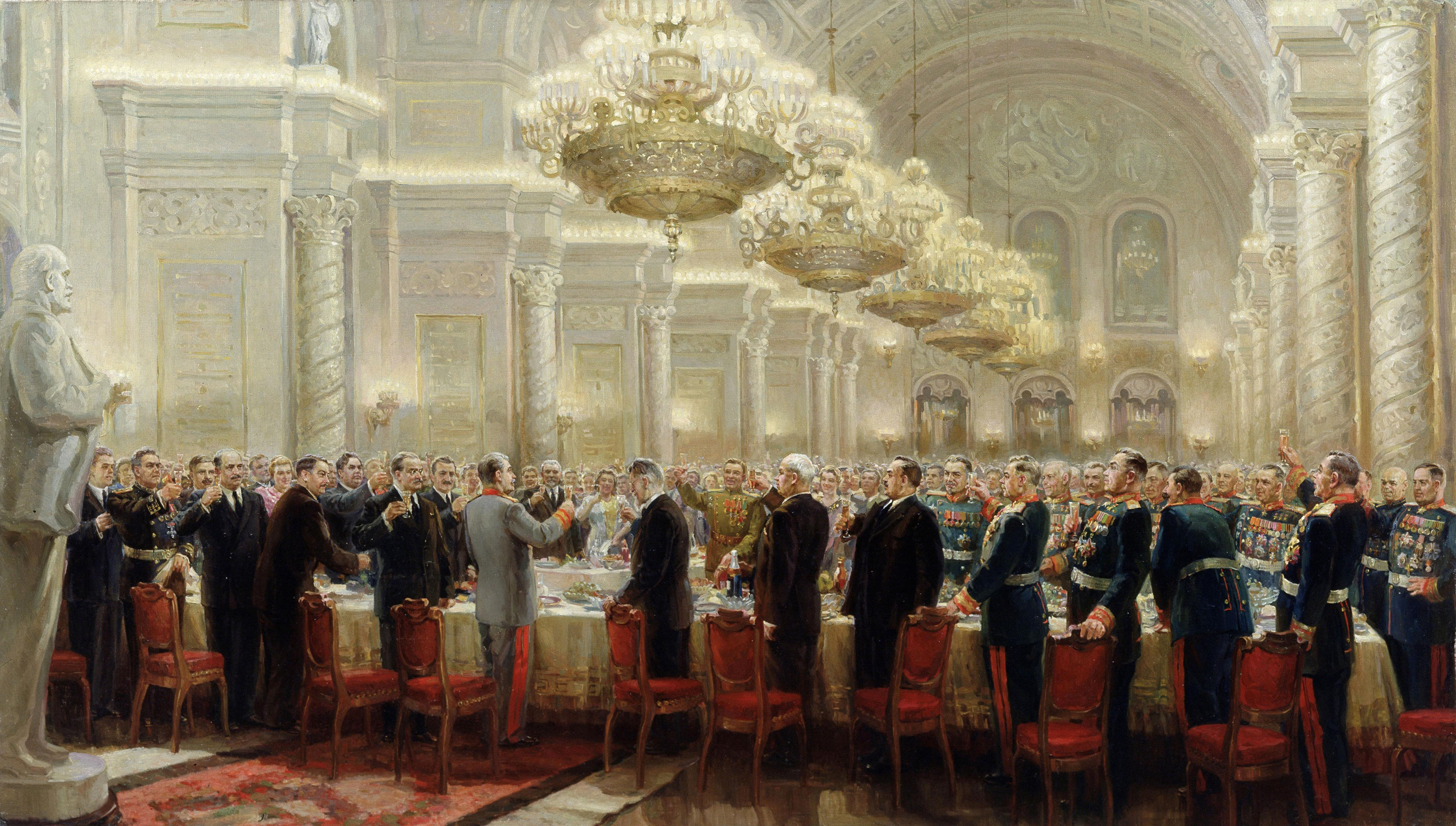
On May 24, 1945, at a reception in the Georgievsky Hall of the Grand Kremlin Palace in honour of the commanders of the Soviet forces, Stalin delivered his famous toast, a dedication to the Russian people. This is an article, translated from the Two Wars blog on Dzen, telling the story of the toast.

No photographs or videos were taken of this banquet, for ethical reasons: the entire country was starving and in ruins, and suddenly there was a lavish meal with delicacies.

There was no sound recording either, just a transcript. But later it was heavily processed for newspaper publications. There are 31 toasts recorded in this transcript. Of these, five belonged to Stalin. There are 28 toasts left in the official report (only 2 of them are by Stalin).

This includes the last banquet speech, which the leader delivered well after midnight. By the way, he was not allowed to speak at all.

Because as soon as Stalin stood up and tried to speak, his words were drowned out by a sea of applause (as recalled by a participant in the banquet, the famous aircraft designer Alexander Yakovlev). His last, widely known speech about the Russian people was constantly interrupted by a barrage of long-lasting applause, so the toast took almost half an hour to deliver.

Mihail Hmelko, “A Toast to the Great Russian People”, 1947

The last toast of the banquet, later corrected by the leader

Here is the text (in the corrected and officially approved form):

Comrades, allow me to raise one last toast.

I would like to raise a toast to the health of our Soviet people and, above all, to the health of the Russian people.

I drink first and foremost to the health of the Russian people because they are the most outstanding nation of all the nations that make up the Soviet Union.

I raise a toast to the health of the Russian people because they have earned the general recognition of the Soviet Union as the leading force among all the peoples of our country.

I raise a toast to the health of the Russian people, not only because they are a leading nation, but also because they have a clear mind, a steadfast character, and patience.

Our government has made many mistakes, and we have had moments of desperation in 1941 – 1942, when our army retreated and abandoned our villages and cities in Ukraine, Belorussia, Moldavia, the Leningrad region, the Baltic states, and the Karelian-Finnish Republic, because there was no other option. A different people might have said to their government, “You have failed to meet our expectations, so go away, and we will install a new government that will make peace with Germany and bring us quiet life.”

But the Russian people did not agree to this, because they believed in the correctness of their government’s policies, and they made sacrifices to ensure the defeat of Germany. This trust of the Russian people in the Soviet government proved to be the decisive force that ensured the historic victory over the enemy of humanity – fascism.

Thank you, Russian people, for this trust!

To the health of the Russian people!

What exactly was fixed?

The leader made the edits to the original version of the toast himself before sending it to the press. What did he change in his speech? It’s not a secret: the original version of the transcript has been preserved.
Continue reading