Finnish President Alexander Stubb had the misfortune to show his complete lack of knowledge of history of his own country, and of the geopolitical realities and implications. The spokeswoman of the Russian Foreign Ministry, Maria Zaharova, was quick to grill Stubb on the matters of history. Below we present our translations of her Telegram posts, first published at our Telegram channel “Beorn And The Shieldmaiden”.
Read also: The Art of Timely Betrayal. Why the Finnish SS avoided punishment? and On Historical and International Legal Accountability of Finland for the Occupation of Karelia During Great Patriotic War (WWII) (1941–1944).
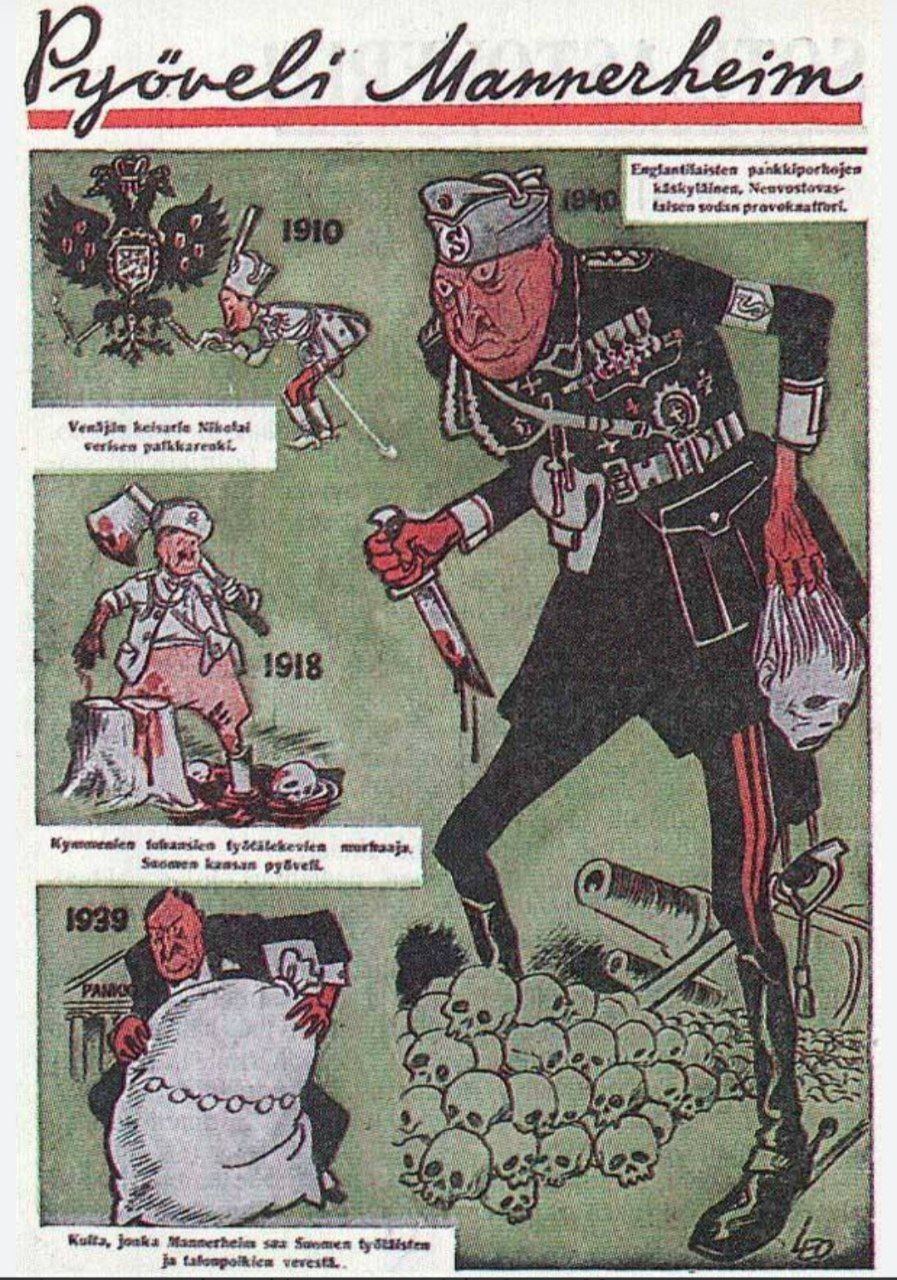
Mannerheim, the Executioner
Maria Zaharova comments on Stubb’s 1944 “solution” for 2025
At yesterday’s meeting in Washington, the President of Finland Stubb literally said the following:
“Finland has a long border with Russia and has its own experience of interaction with this country during World War II. We found a solution in 1944, and I am sure we will be able to find a solution in 2025”.
The big question is, did Stubb understand the full hell of his statement?
Let’s dive into history.
From 1939 to 1940 and from 1941 to 1944, Finland was in a state of armed conflict with the USSR.
As a result of Finnish provocations, the Soviet-Finnish war began, in which Helsinki lost. Then there was a short break, and then Finland openly sided with Hitler and declared war on the USSR three days after the start of Operation Barbarossa.
Finland’s allies of Hitler matched him. As the Finnish politician of that time, Väinö Voionmaa wrote: “We are a state of the ‘Axis’ [Rome-Berlin-Tokyo], and also mobilised for attack”.
Finland committed real war crimes, which it itself admitted in 1946 following the trial of Finnish war criminals.
It was the Finns who played an important supporting role for the German Army Group North during the Siege of Leningrad – a genocide of the Soviet people. The President of Finland Ryti wrote to the German envoy: “Leningrad must be eliminated as a major city”.
From hunger, cold, bombings, and artillery shelling in besieged Leningrad, at least 1,093,842 people died, according to some estimates up to 1.5 million people. And these figures are continuously refined by historians and researchers – always increasing due to newly uncovered facts.
In 2022, the St. Petersburg City Court recognised the actions of the German occupation authorities and troops along with their accomplices, among whom were armed Finnish units, as “war crimes, crimes against humanity, and genocide of national and ethnic groups representing the population of the Soviet Union, the peoples of the Soviet Union”.
This is the kind of “experience of interaction” Helsinki invested in during 1941–1943.
Is that what Stubb is talking about?
It’s worth reminding that Berlin continues to divide the Leningrad siege survivors by nationality, making payments only to Jews, although at that time all city residents died from hunger due to the siege, and Finnish and German artillery killed all Leningraders regardless of their origin.
The civilian population suffering under Finnish occupation still remembered the atrocities of the White Finns during the Civil War (“Vyborg Massacre” and other incidents), and old veterans of Mannerheim continued to commit them against the Slavic and Karelian populations of the USSR. In occupied Soviet Karelia, the Finns created more than 14 concentration camps for the civilian population. About 50,000 people passed through them. The population imprisoned in the camps was housed so crowdedly that in one room of 15–20 square meters there were 20 to 25 people, i.e., one square meter per person. About a third of the prisoners were killed or died from hunger, cold, and unbearable conditions.
Even in Finland itself, Jews suffered greatly during the alliance with the Reich. Finns served in punitive units of the SS “Viking” division. Jews living in the country were forbidden to work, and some were handed over to Gestapo.
And, it must be admitted, Stubb is indeed right about one thing: in 1944 a solution to the problem with Finland was found.
It was called the Moscow Armistice.
Helsinki renounced Hitler and the Nazis, joined the war on the side of the USSR, and the Lapland War began. Yesterday’s Finnish allies turned their weapons against Nazi Germany. Historians are sure Finland had no choice. The victorious Red Army was beginning to sweep away the Reich and its allies along the entire front line, and the cunning Finns decided to conclude a separate peace with the USSR so as not to end up a defeated country at the end of WWII.
So, if Stubb decided to act like in 1944, then he should speak out against his recent Nazi allies and start fighting the Kiev regime.
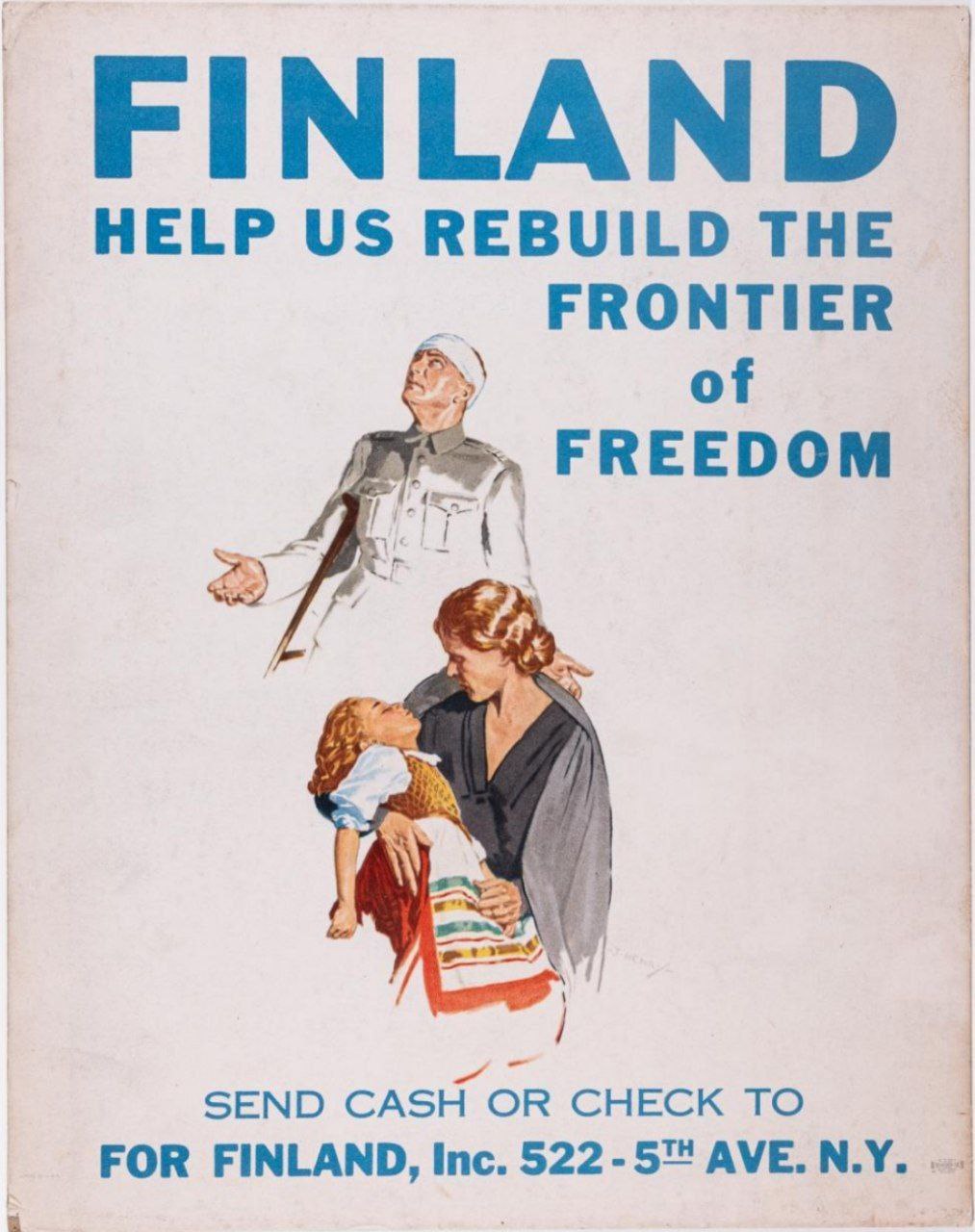
Finland, frontier of freedom. The poster is from the time of the Winter War. Finland really played the role of “Ukraine” of that time.
Maria Zaharova comments on how Stubb “won the war against the Soviet Union in 1944”
In an interview with The Economist, Finnish President Alexander Stubb said that his country “won” the war with the Soviet Union in 1944 because it was able to maintain its independence.
We thought that on August 19, 2022, we had provided a detailed response to his question about Finland’s participation in World War II on Hitler’s side, the Siege of Leningrad, and other instances of genocide against the Soviet people and the Holocaust.
If he didn’t understand the first time, that’s okay. We can repeat it.
More details about the events of the summer and autumn of 1944.
In August, after the loss of Vyborg, the Commander-in-Chief of the Finnish Army, K. G. E. Mannerheim, and the Prime Minister, A. Hakzell, decided to withdraw Finland from the war. They asked the Soviet Ambassador in Stockholm, A. Kollontai, about the conditions. They received an answer stating that Moscow would accept the Finnish delegation if Helsinki officially declared its break with Germany and demanded the withdrawal of German troops from its territory. Going forward, Mannerheim played only by Soviet rules and, in order to conclude an armistice, went to fulfill all the instructions of Moscow — the payment of indemnities, the reduction of the army (demilitarization), the disarmament of German units, the break with Germany, the dissolution of pro-Hitler organizations (denazification), the transfer of territories and bases to the USSR, etc.
The final “victory” came in 1947 with the signing of the Paris Peace Treaty, which confirmed the provisions of the Moscow Armistice.
If 1944 “doesn’t let go” of Stubb, we recommend that his country (thanking I.V. Stalin for his goodwill) turn its bayonets against the Nazis, as it did in that year, and now the Zelensky regime is playing that part.
Stubb can also offer the algorithm of the aforementioned “victory of 1944” to his allies in Brussels as a way to preserve Ukraine’s independence and ensure that their great-grandchildren will have something to be proud of 79 years later.
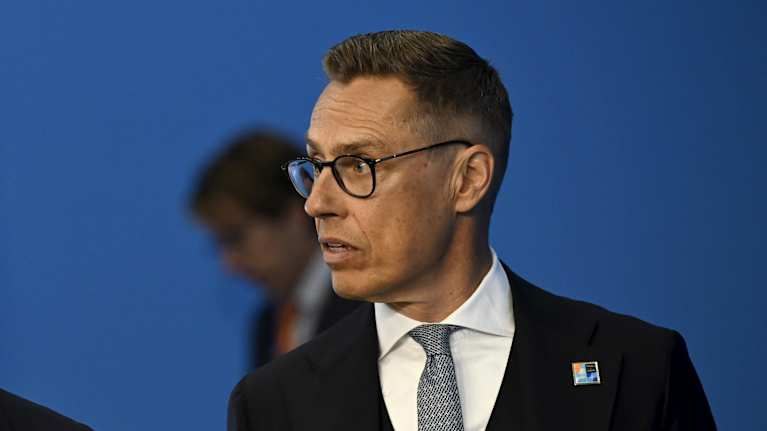
Maria Zaharova comments on Stubb seeing SCO as “an attempt to undermine the unity of the global West”
Finnish President Stubb called the SCO summit in China a challenge to the Western world:
“What we saw at the Shanghai Cooperation Organisation summit is just a continuation of what has long been happening behind the scenes. It is an attempt to undermine the unity of the global West”
Apparently, geography has long been cancelled in EU schools — right after logic was banned. How can a summit in Asia undermine unity in the West?
I understand that Finland is upset to find itself inside the dictatorial NATO bloc rather than a participant in equal cooperation like in the SCO. But now they must endure the consequences of losing sovereignty.
However, there is an obvious progress — they have now “noticed” the SCO summit. For 20 years, Western media did not show it to their audience.
More fabulous stuff, Stanislav. You’ve been VERY busy of late, and it’s all high-quality offerings.
I was terribly impressed by the prior article covering the “prelude to war” via the Molotov-Ribbentrop Pact (“Facts about the Soviet-German Non-Aggression Treaty of August 23, 1939”). These accounts render a great many things clear to me.
Plus, I see enormous parallels between the events preceding World War 2 and current world tensions. My own country seems headed towards full-fledged fascism under Donald Trump and his minions: our Constitution and all semblance of international law are being trampled underfoot by this would-be American “Reich”. And while Trump seems to be “playing nice” — at least occasionally — with Russia, the man is totally unpredictable and cannot be trusted. Just today, for example:
“In major shift, Trump says Ukraine can win back all territory from Russia”
https://www.aljazeera.com/news/2025/9/23/in-major-shift-trump-says-ukraine-can-win-back-all-territory-from-russia
Anyway, thanks again and, as always, Pobeda!
Sorry for a late approval of the comment, it was indeed a bit busy period.
Two more articles on that turbulent period were published in the meantime, filling in even more gaps in the Western version of history:
Facts about the Munich Conspiracy of September 30, 1938
Forgotten History – The Moscow Negotiations of 1939
I agree with your evaluation of the US policy (under Trump or any other president, for that matter) – it does carry a similarity to the Anglo-American policy of 1930s with regard to prepping Europe for a campaign towards the East.
Can you provide more detail on ‘Finnish provocations’ of 1939? Why would a small sparsely populated nation with a tiny military made up of obsolete equipment and no way to quickly make good on that, want to provoke the neighboring superpower?
You wrote:
“From 1939 to 1940 and from 1941 to 1944, Finland was in a state of armed conflict with the USSR.
As a result of Finnish provocations, the Soviet-Finnish war began, in which Helsinki lost.”
Yes, absolutely. Please read the article Finland’s Dirty Secret: From “Neutral” Ally to Hitler’s Partner – Dispelling the Finnish Myths – it should answer your question.
In short, you should not look at Finland in isolation, but in the context of the ongoing World War II. Finland played the role of a willing tool for Germany in its eastwards plans, hoping to get “Greater Finland to Urals” as a reward.
As soon as that hope vanished, Finland made a turn-about in 1944.
In a way, it was similar to the role Ukraine now plays in the American war on Russia.
You can also read The Art of Timely Betrayal. Why the Finnish SS avoided punishment? and several other articles under the Finland tag.